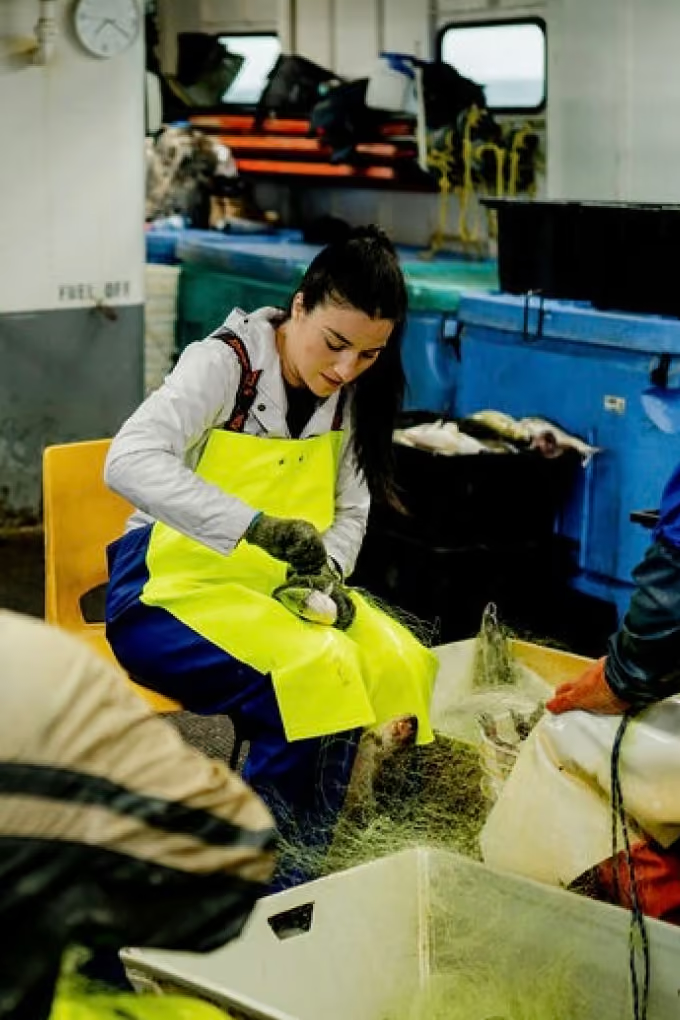
Welcome back to this week’s update from the Testing DNA, Testing Supply Chains project!
.webp)
Last week, we talked a little bit more about what exactly DNA Authentication is and how the technology can address seafood mislabelling.
Essentially, the process of species identification through DNA Authentication happens in three steps:
- Collecting the DNA samples
- Analyzing the DNA samples in the lab
- Comparing the findings to the DNA database and interpreting the results
This week, we’re going to be talking about Step 1, which is collecting the DNA samples.
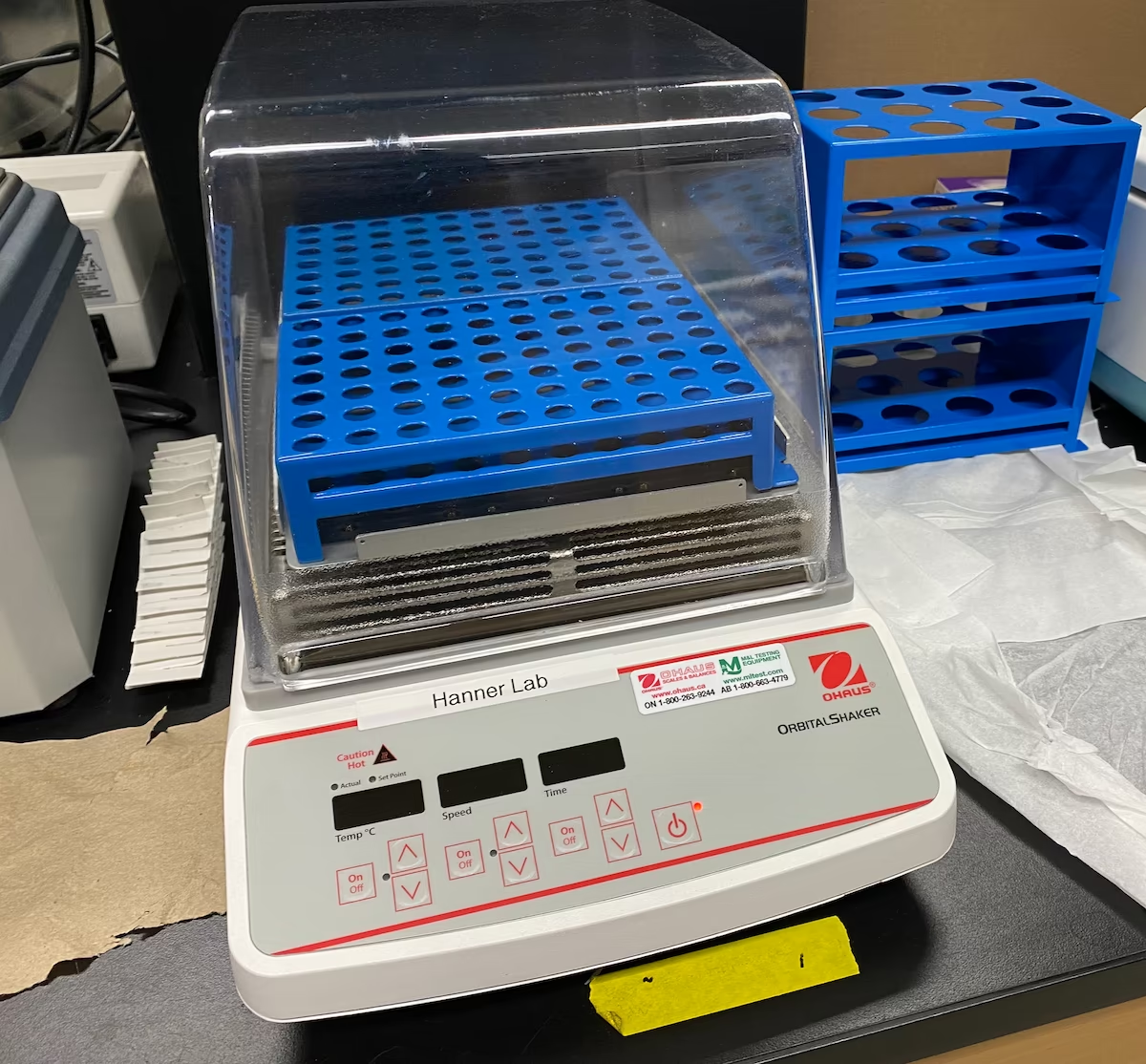
While this might sound fairly straightforward, we wanted to do a deep dive into the specific steps we took to make sure our sampling was random and appropriate for this project, as well as how we made sure there was no risk of cross contamination of samples from the time they were taken at the Organic Ocean facility to when they arrived at Dr. Robert Hanner’s Lab at the University of Guelph.
Our samples were collected by Liane and Dana from SeaChoice.
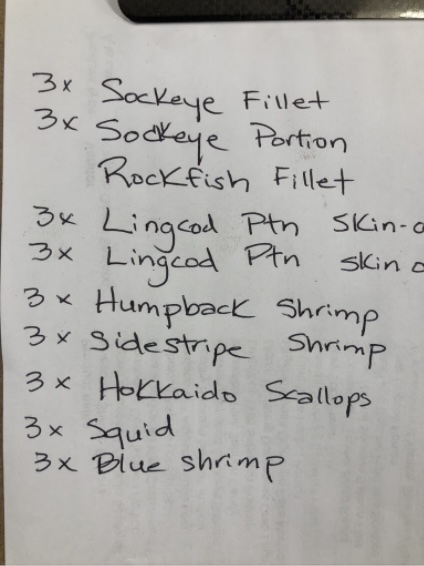
They arrived at Organic Ocean’s facility where they were provided rubber gloves, labels, plastic bags, and razor blades with which to collect the samples. The Organic Ocean team provided Liane and Dana with a list of all the products that they had in stock and the suppliers from where the products had been sourced so that the samples were coming from a range of suppliers.
.jpeg)
After reviewing the list, the SeaChoice team were provided with a box of each product from which Liane and Dana could choose their own three samples. This ensured that the samples were randomly selected by SeaChoice and not pre-determined by Organic Ocean.
As they collected their three samples, Liane and Dana photographed and documented the product labels as well as the information on the box to be compared with the results of the DNA analysis.
For each sample, Liane and Dana used a sterilized razor blade to cut off a small portion of the fish (unless the seafood product could be provided whole, such as a scallop or a shrimp). For frozen-at-sea products (e.g. humpback and sidestripe shrimp), Liane and Dana collected sample material from one item within the package (which required they thaw the frozen brine in which the shrimp tails were contained).
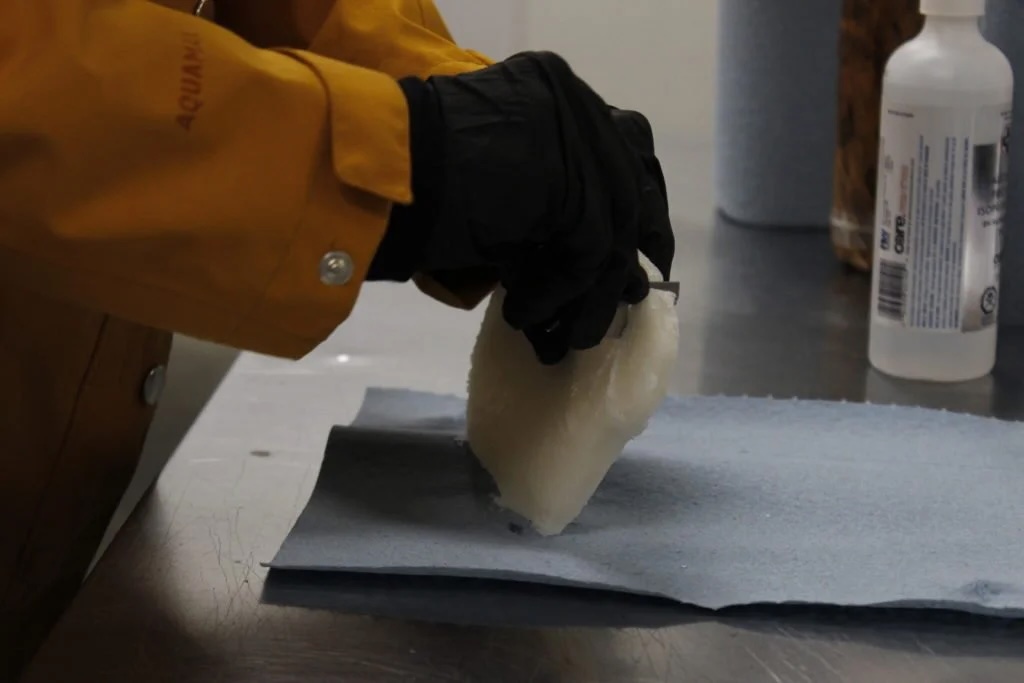
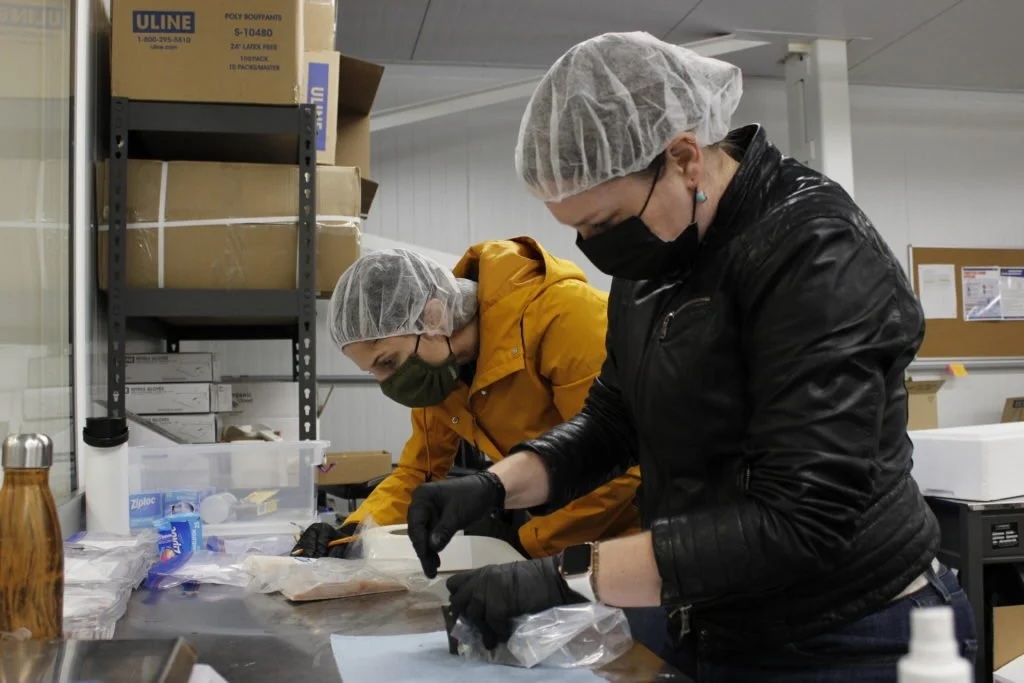
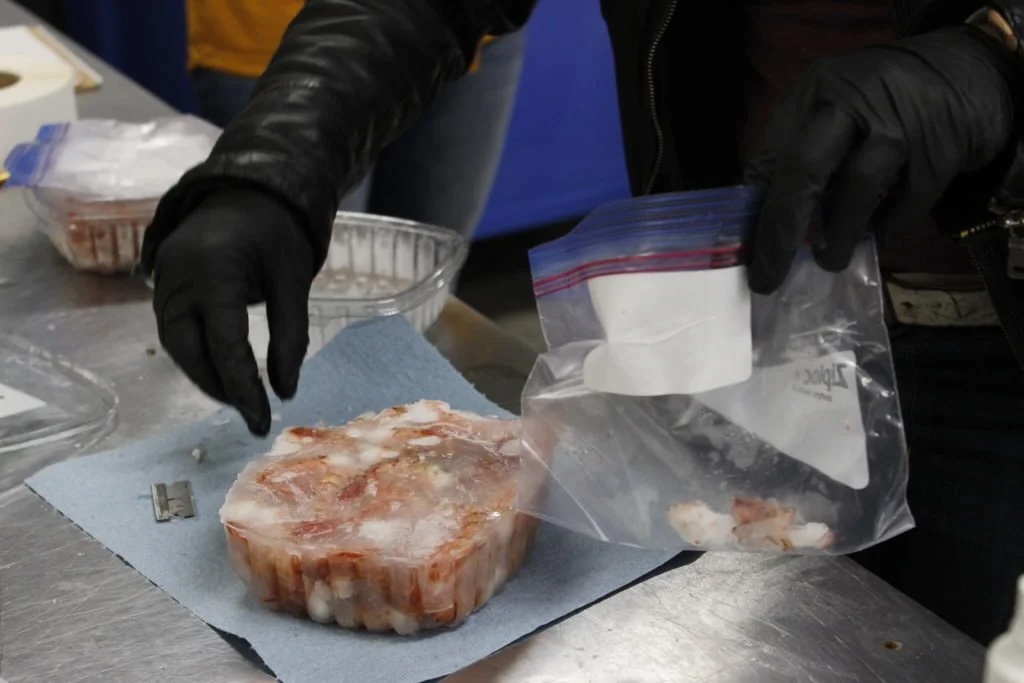
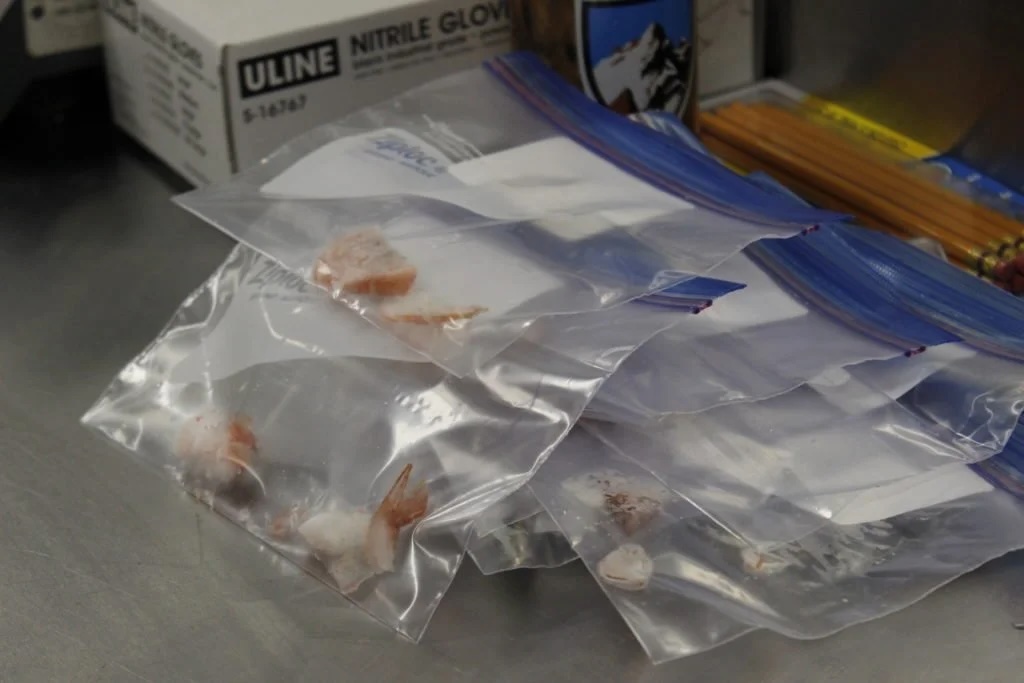
After each sample was taken, they were placed in their own plastic bag. Then, Liane and Dana attached a numbered label to the inside of each plastic bag and made a note of the labelling information associated with that sample.
Liane and Dana collected 36 samples for DNA analysis. The information for each sample was collected in a spreadsheet that the team will use to compare to the results of the DNA authentication analysis to determine whether or not the products were labelled correctly.
Afterwards, the samples were carefully packaged and shipped to Dr. Robert Hanner’s Lab at the University of Guelph where I’ll be joining him in the upcoming weeks to analyze the samples and review the results.
Stay tuned for our next update which will be taking you behind the scenes in the lab to observe how the samples are analyzed and authenticated.