I’m a social scientist and I haven’t set foot into a science lab since high school, so this was a really exciting chance for me to learn more about the scientific process and exactly how this technology works to identify seafood mislabelling.
A couple of weeks ago we talked about what the DNA Authentication process is, but what I learned from the researchers in Dr. Hanner’s lab is that DNA Authentication can essentially be broken down into three steps: extraction, amplification, and sequencing.
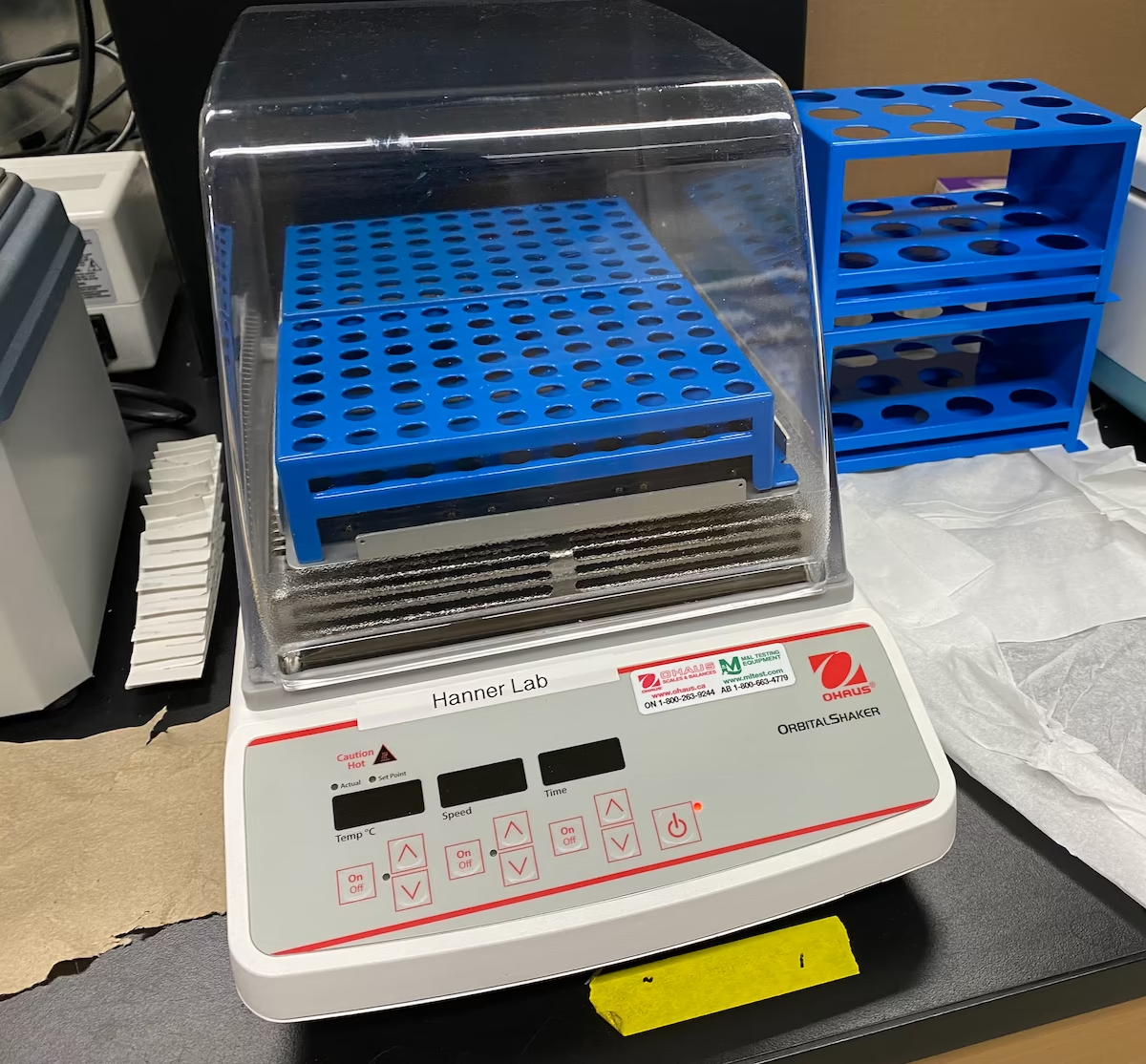
During my time in the lab with them this week, we focussed on extraction and amplification. When I rejoin them again in a couple of weeks, we’ll look more into sequencing, but until then let’s talk more about exactly what happened once our seafood samples from Organic Ocean arrived in the lab.
Extraction
The entire DNA Authentication process takes about two days. The first step is an overnight incubation process to isolate the DNA from everything else in the sample. In the lab, researchers took the Organic Ocean samples that SeaChoice provided and cut off smaller sub-samples, which they then mixed with several different “reagents”. These reagents are solutions that break down materials that are distracting from the DNA so that we can just get to the DNA. The sub-sample is left to incubate with these reagents overnight to ensure the next day, we’re just working with the DNA.
Dr. Hanner’s researchers completed this incubation step the night before, so when I arrived in the morning, the DNA had already been extracted and isolated and was ready to be amplified.
Amplification
Basically, the amplification process is making copies of a section of the DNA, so that we have a higher concentration of it to test, which makes it easier to identify. Creating copies of the DNA is done through Polymerase Chain Reaction (PCR). This involves mixing the DNA sample with a different solution that creates copies, or amplifies, our section of DNA. Again, having a higher concentration of this DNA makes it much easier to test.
Before moving on to the next step, researchers need to make sure that the amplification process was successful and that they were actually able to create more copies of the DNA. To test if the amplification process was successful, they check the sample on a gel solution made of agarose powder. The sample is injected into wells within the gel and then an electric current is run through the gel in a process known as gel electrophoresis. The gel electrophoresis will negatively charge one end of the gel and positively charge the other end. DNA is negatively charged and so it will move through the gel towards the positive end of the gel. Researchers are looking to see the presence of the DNA to determine if the extraction was successful and if there are enough DNA copies to work with. The higher concentration of extracted DNA or the amplified number of copies , the stronger the signal on the gel. Researchers can see this on an image of the gel and determine whether or not there is enough genetic material to move onto the next step of the process.
Once the amplification is done, we want to clean the DNA to make sure that we’re sending high quality samples to be sequenced to ensure we get as good of a sequences as possible. I got to join Erika in the gel room today to witness the process to clean up our seafood DNA samples before sending them off for sequencing.
The DNA is cleaned using a magnetic beads solution. Our DNA sample was mixed with this magnetic beads solution in order to separate the amplified DNA from the rest of the sample. Only the target DNA section is prepared to be sequenced, and so we want to get rid of everything else except that. Since the long DNA strands are negatively charged, they will attach to magnetic beads in the solution first and separate from other elements in the solution, including the shorter DNA strands. After the long DNA strands that we want have been separated from everything that we don’t want, we wash the sample with ethanol. Then the DNA is released from the magnetic beads using an elution buffer. After getting rid of everything, including the magnetic beads, we are just left with a solution containing a cleaned-up product of the target section of DNA in a high concentration.
Before sending it off for sequencing we check the sample on the gel one more time, going through the process of injecting the sample into the gel and watching to see how it moves through in order to determine whether or not we’ve been successful in eliminating everything except the high concentration of those long strands of DNA.
If the gel looks good, the next step is to send it for sequencing to the genomics lab. In the genomics lab they’ll sequence the DNA and send us back a sequence file that will tell us the species matches present in the sequence. When that file comes back, I’ll be rejoining Dr. Hanner’s researchers to analyze the sequence and match it to a global database to determine whether or not our seafood samples are actually what they said they were on the label.
The DNA is cleaned using a magnetic beads solution. Our DNA sample was mixed with this magnetic beads solution in order to separate the amplified DNA from the rest of the sample. Only the target DNA section is prepared to be sequenced, and so we want to get rid of everything else except that. Since the long DNA strands are negatively charged, they will attach to magnetic beads in the solution first and separate from other elements in the solution, including the shorter DNA strands. After the long DNA strands that we want have been separated from everything that we don’t want, we wash the sample with ethanol. Then the DNA is released from the magnetic beads using an elution buffer. After getting rid of everything, including the magnetic beads, we are just left with a solution containing a cleaned-up product of the target section of DNA in a high concentration.
Before sending it off for sequencing we check the sample on the gel one more time, going through the process of injecting the sample into the gel and watching to see how it moves through in order to determine whether or not we’ve been successful in eliminating everything except the high concentration of those long strands of DNA.
If the gel looks good, the next step is to send it for sequencing to the genomics lab. In the genomics lab they’ll sequence the DNA and send us back a sequence file that will tell us the species matches present in the sequence. When that file comes back, I’ll be rejoining Dr. Hanner’s researchers to analyze the sequence and match it to a global database to determine whether or not our seafood samples are actually what they said they were on the label.