During my last visit, we completed all the steps necessary to extract and PCR amplify the “DNA Barcode” gene from the seafood samples. Once we completed those steps, we sent the PCR product off to be sequenced at the University of Guelph’s Advanced Analysis Centre/Genomics Facility.
Basically, that means the genomics lab took the amplified and clean PCR products that we sent them and used a DNA sequencing machine to read the “DNA Barcode” sequence from each of the samples. In order to identify our samples, the DNA sequence is compared against the reference sequences in the global Barcode of Life Database (BOLD). The BOLD database contains the DNA sequences for over 750,000 species and is used widely by scientists for DNA authentication.
With the sequenced DNA from the genomics lab, we’re able to see what percentage of our DNA matches to species already in the system. For example, with a high-quality DNA sequence, we’re likely to see something like “100% match to Ophiodon elongatus”, which is the scientific name for lingcod. We then would look back at how the sample was labelled and if it was labelled as lingcod, then we know the product is being accurately labelled. If the product is labelled as something else, for example, rockfish, then we know this product was mislabelled.
What happens if we don’t get a 100% match?
There are instances in which the results will come back with a match that’s less than 100%.
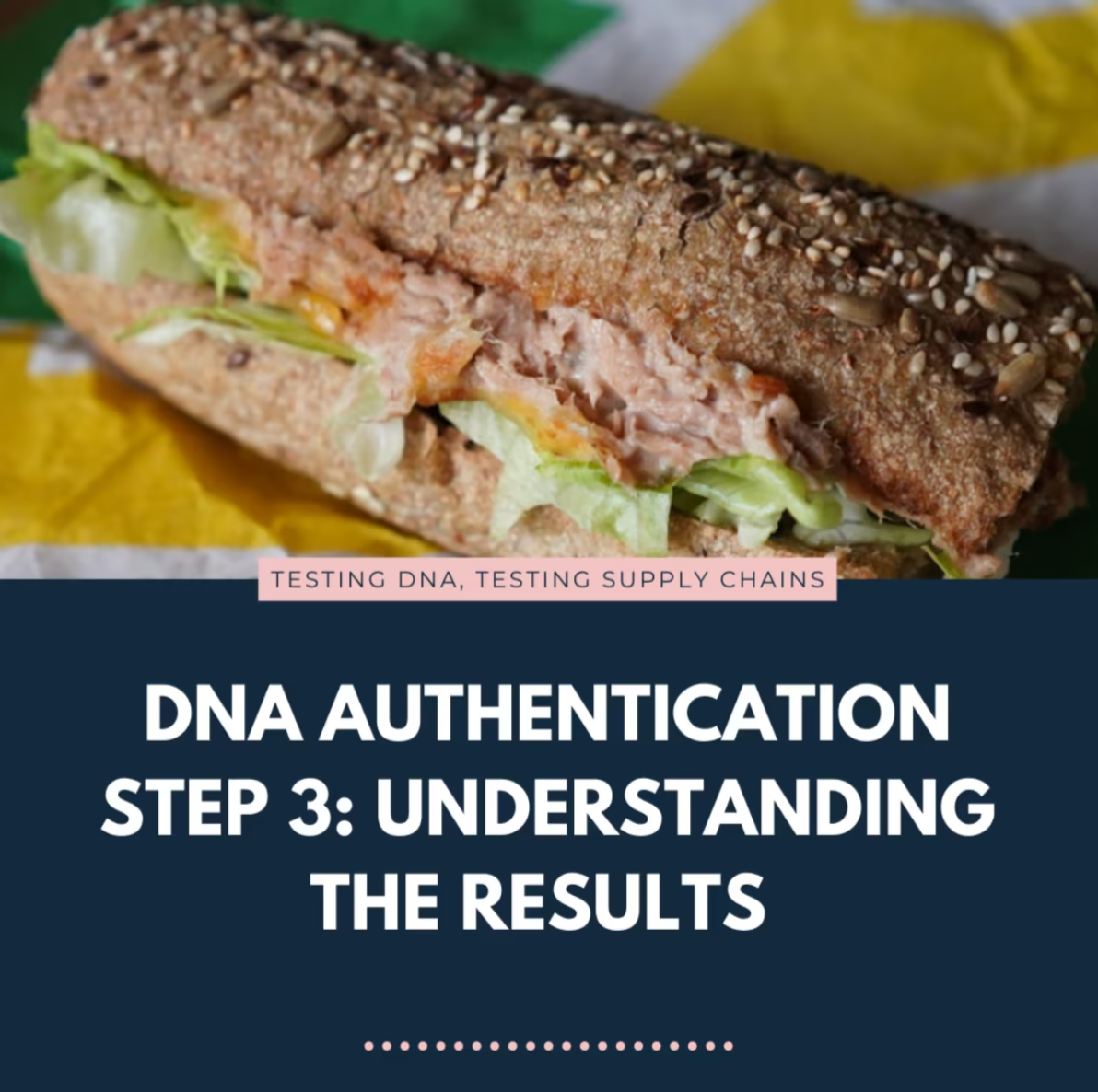
This occurred recently when “tuna” taken from Subway sandwiches was sent to a lab for DNA authentication - the Subway Tuna Scandal. For whatever reason, they were unable to get a 100% match.
Results may come back with a lower percentage match. For example, if our lingcod sample came back with only a 49% match to Ophiodon elongatus, we wouldn’t be able to say with certainty that the sample was lingcod or not.
We might not be able to get a 100% match because of the quality of the sample, issues during the amplification and sequencing processing, or if the sample has been altered in any way. For example, in the case of the Subway tuna, the “tuna” was being tested after extensive processing - cooked, canned and mixed with other ingredients like mayonnaise.
So, not getting a 100% match doesn’t necessarily mean that the sample is mislabelled. It just means the results are inconclusive and the species of the sample can not be confidently determined.
Organic Ocean has provided high-quality, unprocessed seafood samples to test. This should enhance the ability to conclusively determine the species of the seafood.
Scientific Name vs. Common Name
The DNA results are provided with both the scientific name of the species and its common name. This is important because a seafood’s common name often doesn’t tell us nearly enough about the product to confidently determine whether it's the correct species even though that is often how seafood products in Canada are labelled.
For example, let’s look at rockfish. There are actually over 100 species of rockfish and knowing the specific species is critical to understand stock levels and whether or not that species is sustainable or not. In 2018, SeaChoice determined that of the 22 rockfish species that exist in British Columbia, 1 is in the critical zone, 3 are in the cautious zone, 6 are healthy, and 12 are unknown.
The Canadian Food Inspection Agency only requires that the product be labelled as “rockfish” with frequent labelling of rockfish by a different name entirely, like redfish, ocean perch, or Pacific snapper.
This is why DNA authentication is only one piece of the seafood mislabelling puzzle. Labelling guidelines need to be robust to ensure transparency and trust in our seafood. As we roll out the results of our DNA authentication and share our final project reports over the next few weeks, we’ll also explore whether and how seafood labelling guidelines can be improved.