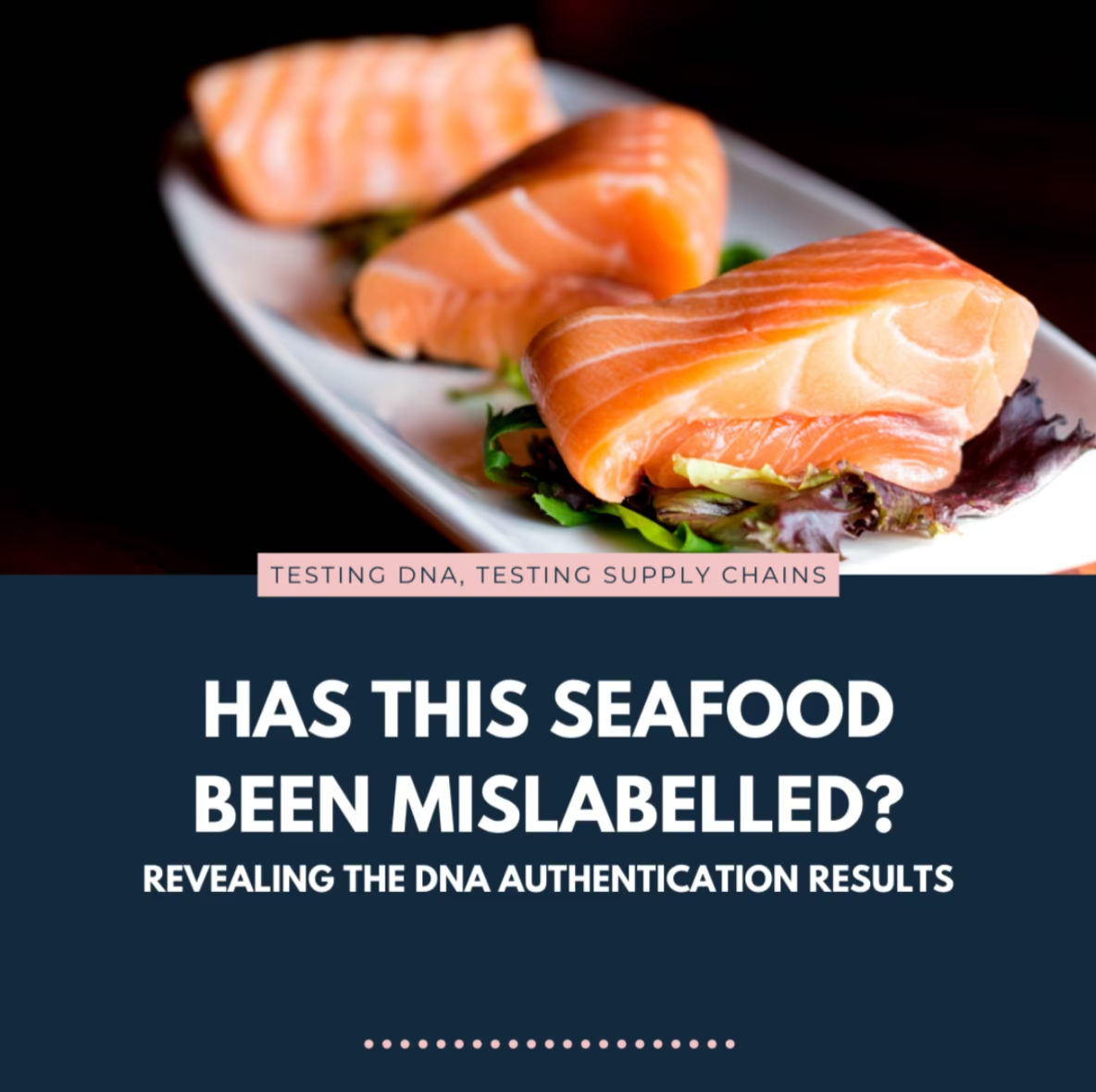
Over the last few weeks, we collected and analyzed 36 seafood samples from Organic Ocean to identify which species they were from through DNA authentication testing with leading eDNA researcher, Dr. Robert Hanner.
Now, it’s finally time to reveal the results of the DNA authentication test.
The DNA analysis for all 36 samples was successful in matching to a species in the database. However, some matches were better than others and some of the matches require a bit more investigation. We’ll talk more about this below!
As a quick reminder, species are given one scientific name, in Latin and conventionally written in italics, that is used by scientists to differentiate that species from all others. Species also have a common name, or several common names, that are used outside of the world of science. Canada’s naming guidance for seafood products, the Canadian Food Inspection Agency’s (CFIA) Fish List, allows some species to go by several common names and allows multiple common names to apply to the same species. It can get pretty confusing.
So - what did our DNA analysis discover?
In short, of the 36 samples we collected, we were able to confidently identify 28 of the samples as being labelled correctly. These 28 samples were identified by the DNA authentication process as the same species that were labelled as, meaning there was a very high match (i.e., over 99%) to a reasonably long gene sequence in the Barcode of Life’s reference library.
The remaining samples warrant a closer look. The 8 samples that came back with unexpected molecular IDs came from three different product types: calamari (squid), rockfish and scallops.
Calamari
Our calamari samples were determined to be likely mislabelled because they were labelled by Organic Ocean’s supplier with the scientific name Ommastrephes bartramii but the DNA authentication indicated the samples were actually from a different species, Dosidicus gigas, commonly known as Humboldt squid. We have a high confidence that these results are correct because each of the samples were 100%, 100% and 99.5% identical to a 658 base pair long sequence of DNA from Dosidicus gigas. Interestingly, the CFIA Fish List allows BOTH species of squid to go by the common name “calamari”, which was the common name listed by the supplier. So, from a scientific name perspective, the samples were mislabelled but by the CFIA’s rules for common names, they weren’t.
Rockfish
We had samples from 3 different fillets of rockfish labelled by the supplier as Sebastes borealis, or shortraker rockfish. Of those, we were able to confidently identify one as being correctly labelled. One of the samples was matched with high confidence to a different rockfish species, Sebastes aleutianus, common name rougheye rockfish. This sample had a 100% match to a 652 base pair long DNA sequence from rougheye rockfish, so we can be pretty sure that this fillet was from a different species. The third sample was also matched to Sebastes aleutianus, or rougheye rockfish, but with a significantly lower confidence, only 85.9% across 563 base pairs. The project team concluded this third sample identification to be inconclusive.
Now, you might be wondering if this really matters - rockfish are rockfish, right? Well, there are actually over 100 species of rockfish that can be labelled under the “rockfish'' common name in Canada. And suppliers (or for that matter, retailers or other businesses that sell seafood) are not required to include the species scientific name on their products, which is problematic because it really does matter which species of rockfish it is, if you care about sustainability. For example, in a 2018 report SeaChoice determined that of the 22 rockfish species that exist in British Columbia, 1 was in the critical zone, 3 were in the cautious zone, 6 were healthy, and 12 had unknown population levels.
Yet the Canadian Food Inspection Agency allows all species in the rockfish genus (Sebastes) to go by the same common name, “rockfish”, so if businesses use this name their consumers have no idea whether it represents a species that’s being fished sustainably or a species that’s in the critical zone.
That’s a very good reason why DNA authentication of seafood is only one piece of the seafood mislabelling puzzle. Labelling guidelines need to be robust and accurate to ensure transparency and trust in our seafood. To dig deeper into this issue, let’s talk about our final product, scallops.
Scallops
Identifying the scallops and interpreting the results was arguably the trickiest part of this entire project.
We analyzed 3 samples of scallops which were labelled by the supplier as “Hokkaido scallops”, scientific name Patinopecten yessoensis. However, the DNA authentication process didn’t confidently match them to that or any other species - the % match wasn’t as high as we saw with the other samples (~97%) and the sequence length was a lot shorter, 186 base pairs instead of 650+. The combination of these two factors means that we can’t confidently draw any conclusions about whether these samples were mislabelled or whether the results actually indicate an issue with the methodology or the primers used to amplify the DNA, or even gaps in the Barcode of Life’s genome reference library.
In the hope of getting to the bottom of this, Dr. Robert Hanner’s lab will be running additional analysis on our scallop samples to try to get a clearer picture of what the species is so that we can try to make a confident determination. We should have the results back from that by the end of August, so stay tuned!
In the meantime and as long as the CFIA allows businesses lots of flexibility in the names they use - it actually doesn’t matter if these samples came from Patinopecten yessoensis and Chlamys islandica - the Fish List allows both species to be called just “scallops”.
So, what does this mean for me?
Do our results mean that you should stop eating calamari, rockfish and/or scallops? I would say no, if they are things you want to be eating. But our results do show that Canada’s seafood labelling laws are too lax and should be strengthened so that businesses throughout the supply chain improve their traceability systems and labelling policies. To the extent that DNA authentication is to be a useful tool for species identification, there may need to be more investment in DNA testing capacity and improving the reference libraries used to authenticate the seafood sold in Canada so that the government, businesses and groups like SeaChoice can get clear results to the products they’re testing.