“I never buy farmed fish.”
If I had a nickel for every time I’ve heard that, well, I’d have a lot of nickels.
This month, a lot of people got a new reason to say it. Ian Urbina’s investigation into the global fishmeal trade, “The Dirty Secret Behind the Farmed Fish You Eat,” ran online in The New York Times Magazine on October 8 and as its cover story on October 25. Its argument: fish farming, sold as relief for overfished oceans, is actually making overfishing worse.
While parts of this piece are important reporting the seafood industry needs to hear, the headline conclusion doesn’t hold up against the data.
And like most seafood reporting, it attempts to oversimplify an incredibly complicated topic.
Seafood deserves to be discussed with nuance, so here’s what the story gets right, where it goes wrong, and what it means for the fish on your plate.
What the story gets right
Urbina’s team found forced labour in parts of the fishmeal supply chain. That’s serious, and it deserves the spotlight.
This isn’t new territory for him. Urbina’s 2015 New York Times series, The Outlaw Ocean, exposed forced labour and modern slavery on fishing boats, especially in Thailand. It became an acclaimed 2019 book and a nonprofit newsroom, the Outlaw Ocean Project. And it made an impact. After the project’s investigation into China’s seafood industry, Sysco cut ties with a major Chinese processor.
The good news is that social accountability in seafood is rising fast.
- Certified fishmeal. MarinTrust, which certifies fishmeal and fish oil plants, updated its standard in 2024 to put more weight on social impacts at plants and on fishing vessels. About 48% of the world’s marine ingredients are now certified.
- Better due diligence. In October 2025, Conservation International, LRQA and FishWise launched an updated Social Responsibility Assessment tool. It helps seafood companies find and fix human rights risks, in line with UN and ILO standards.
- Tougher import rules. In 2024, the U.S. made seafood a high-priority sector for enforcing its ban on goods made with Uyghur forced labour.
Joachim de Smedt, a tilapia farmer in Madagascar who has pushed back on the story, puts it best: “A crime in the supply chain calls for fixing the supply chain — not for a verdict on the food at the end of it” (I thoroughly enjoyed his SUbstack response to Urbina’s article and I suggest giving it a read).
The worst cases come from places with weak licensing and little oversight. That’s a governance problem. It’s fixable. And it doesn’t make farmed fish the problem.
Where it goes wrong: “farmed fish” isn’t one thing
“Farmed fish” isn’t a homogenous term. Some species need fishmeal in their feed. Many need very little. And about a third of global aquaculture, like shellfish, seaweed and filter-feeding carp, needs no feed at all.
Lumping them all together paints a misleading picture. And most readers of Urbina’s article are just going to walk away thinking that all farmed fish require hundreds of other fish to grow them.
Farms are taking pressure off the ocean
Farms produced a record 103 million tonnes of seafood in 2024, 53% of the world total. That means most of the seafood we eat today comes from farms (FAO), while wild catch has hovered around 90 million tonnes for three decades.
That flat line is a ceiling. The ocean can only give so much. Nearly all the growth in seafood since the 1990s has come from farms. Without them, all that demand would land on wild fish.
And those wild fisheries are in better shape than you might think. 72.6% of global landings come from sustainable stocks, because the biggest fisheries tend to be the best managed (FAO).
Salmon feed has come a long way
The story says a salmon can eat several times its own weight in wild fish. And respectfully, *eye roll* - that number belongs to the 1990s.
In 1990, about 90% of Norwegian salmon feed came from marine ingredients. By 2020, it was 22.4%. The rest was mostly soy protein, canola oil and wheat.
Today, it takes roughly one kilo of wild fish to grow one kilo of farmed salmon. The fish in, fish out ratio for Atlantic salmon fell from 3.21 in 2000 to 0.96 in 2020 (IFFO).
Canada tells the same story. About 80% of Canadian salmon feed now comes from non-fish sources, and about 95% of the fish ingredients come from certified sustainable fisheries.
Even the scientists who first raised the alarm about fishmeal back in 2000 have seen the shift. Two decades later, they found the fish in, fish out ratio had fallen for every fed species (Naylor et al., 2021).
Putting leftovers to good use
A growing share of fishmeal doesn’t come from whole, freshly harvested fish at all. Heads, frames and trimmings left over from processing fish for people made up 34% of fishmeal and 54% of fish oil in 2024. That’s food waste turned back into food.
The Urbina article also tries to claim that most of the wild seafood that’s harvested today is destined for fishmeal instead of human consumption and that’s not true. Of all aquatic animals produced in 2024, 89% went to human food (FAO).
The small fish that do go into feed are mostly well managed. An analysis of 137 forage fish stocks found fishing pressure within sustainable limits.
The future of fish feed
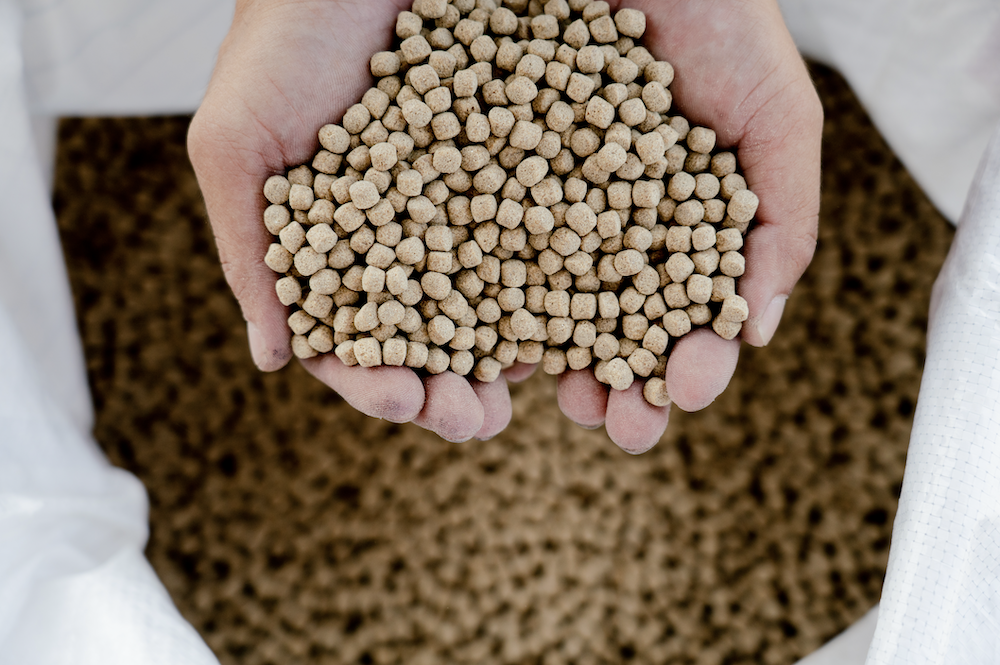
Fish feed is a science. Nutritionists and scientists work diligently to build a recipe for each species and life stage, then grind, mix, cook and shape it into pellets sized to the fish. And the key to feed that supports the sustainable, healthy growth of the seafood we grow is the ingredients within the feed. And the ingredient list includes much more than fishmeal. It also includes:
- Plant proteins and oils. Soy, canola and wheat make up most of modern salmon feed.
- Algae oil. Omega-3-rich algae oil can stand in for fish oil. Producer Veramaris says one tonne of its algal oil spares 60 tonnes of wild fish.
- Insects. Black soldier fly larvae have been in commercial salmon feed since 2018.
- Single-cell proteins. Proteins grown from microbes are in development and testing in Canada.
And the way feed is made is getting more accountable, too:
- Certified feed. ASC’s Feed Standard holds feed mills to social and environmental requirements, including a ban on forced and child labour.
- More transparency. The Global Salmon Initiative now reports new feed-sourcing metrics (Aquaculture Magazine).
Farmed fish is good for you
Farmed fish is one of the healthiest proteins you can eat. In a major review in JAMA, eating one to two servings of fish a week cut the risk of dying from heart disease by 36% (Mozaffarian and Rimm, 2006).
Farmed salmon is a strong source of protein, vitamin D, selenium and marine omega-3s. Those omega-3s, EPA and DHA, are linked to heart and brain health.
Farmed and wild salmon are close on protein. The big difference is fat. As you can imagine, a wild salmon is much leaner, having spent its entire life swimming upstream and battling the elements in the wild ocean. Whereas, a farmed salmon has been leisurely swimming in a pen and eating on a timed cycle for its entire existence.
It’s clean, too. Thanks largely to vaccines, 99% of Norwegian farmed salmon were raised without antibiotics in 2020. And a 15-year Norwegian study of nearly 7,000 fillets found dioxins and PCBs falling over time, with mercury levels low.
And if fish do need antibiotics, there’s a withdrawal period: treated fish can’t be harvested until enough time has passed for the drug to clear. By the time salmon reaches your plate, the antibiotics are gone.
U.S. dietary guidance recommends about 8 oz of seafood a week, roughly two servings. Farmed or wild, salmon is one of the easiest ways to get there.
Seeing it firsthand
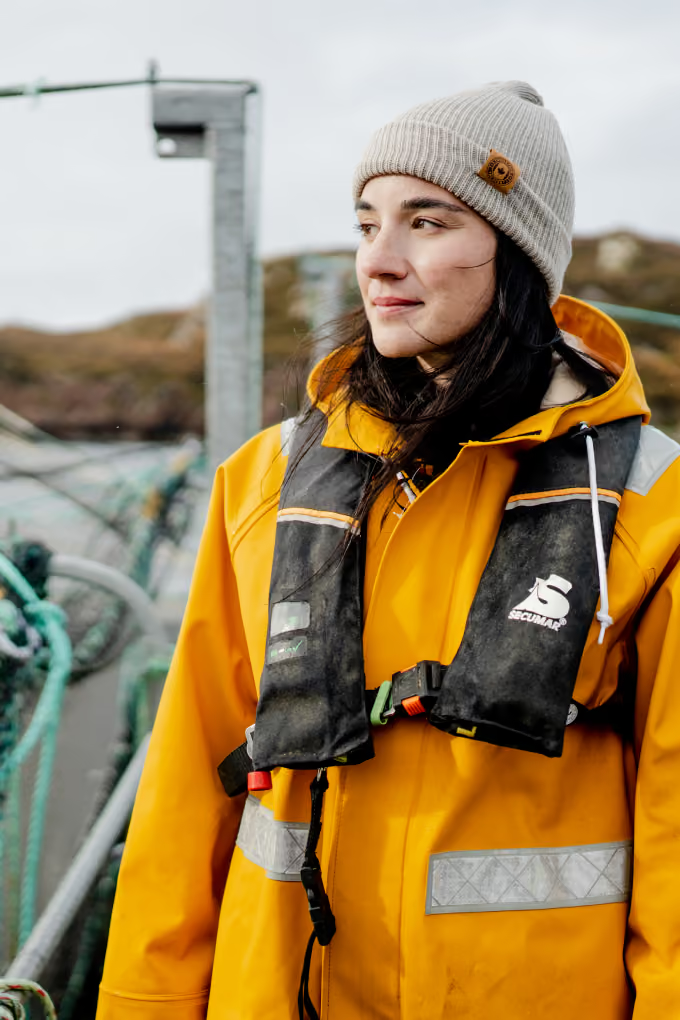
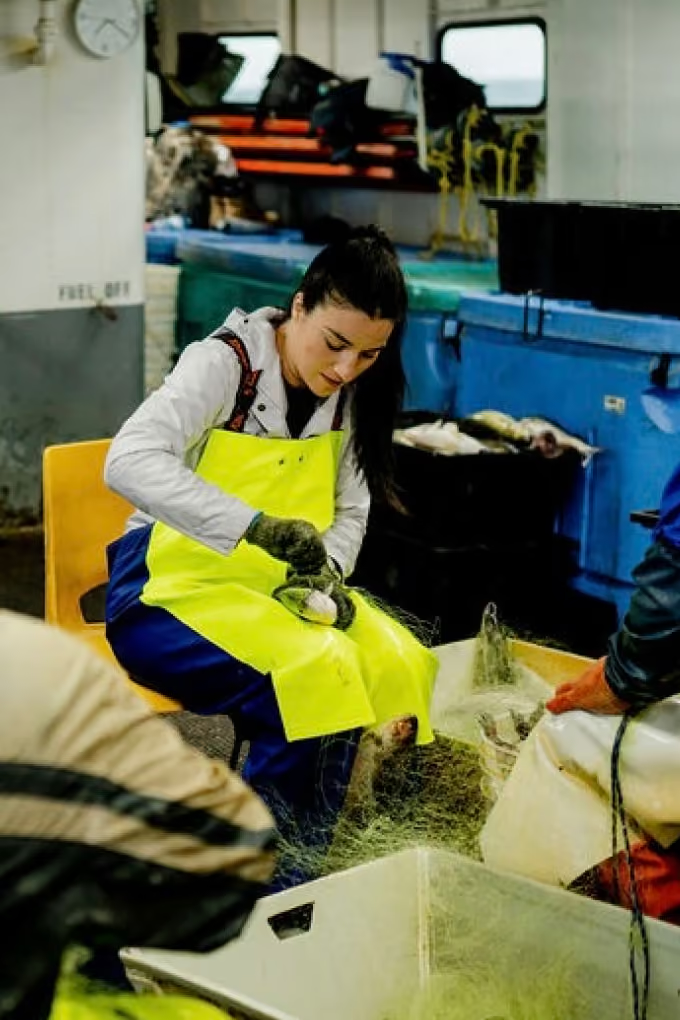
I’ve seen what this looks like on the water. I’ve stood on salmon farms in five countries, plus a land-based farm in Wisconsin:
- Scotland: Loch Duart uses feed built with BioMar from MSC-certified fish trimmings, with a forage fish dependency ratio of just 0.33.
- New Zealand: New Zealand King Salmon has trialled diets designed to cut fishmeal, or remove it entirely, with the Cawthron Institute.
- Norway: Mowi makes most of its own feed, uses 100% deforestation-free soy, and reported a fish in, fish out ratio of 0.62 in 2025.
- British Columbia: BC salmon farmers aim for 100% certified marine ingredients every year, and for 10 to 15% of its feed to come from new ingredients by 2030.
- Atlantic Canada: Cooke makes its own feed at its Northeast Nutrition mill in Truro, Nova Scotia, formulated in-house and BAP certified.
- Wisconsin: Superior Fresh’s fishmeal and fish oil come from fish trimmings, its major ingredients come from North America, and it aims for a fish in, fish out ratio of zero.
Better feed solutions are possible and they’re happening right now. So let’s not scare people off one of the healthiest proteins on the planet. Let’s back the farms already doing it right.
The bottom line
Urbina is right that some fishmeal is caught and processed in ways no one should accept. He’s wrong that farmed fish is making the ocean worse.
The real question was never farmed or wild? It’s farmed how?
So skip the guilt. Ask better questions. Buy with intention. For what to look for at the fish counter, start with my guide, Everything You Need to Know About Farmed Salmon.
And then go cook something delicious.