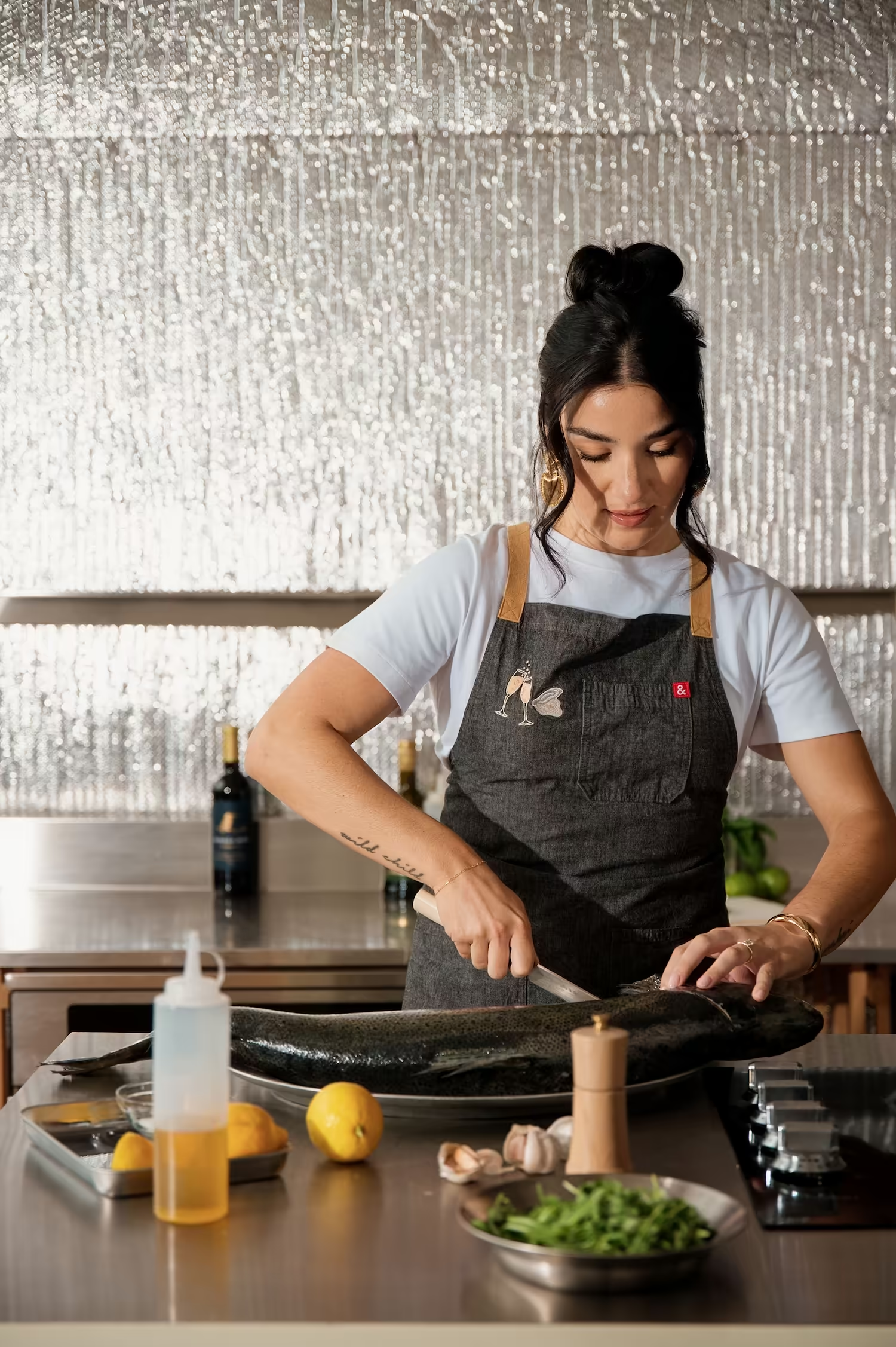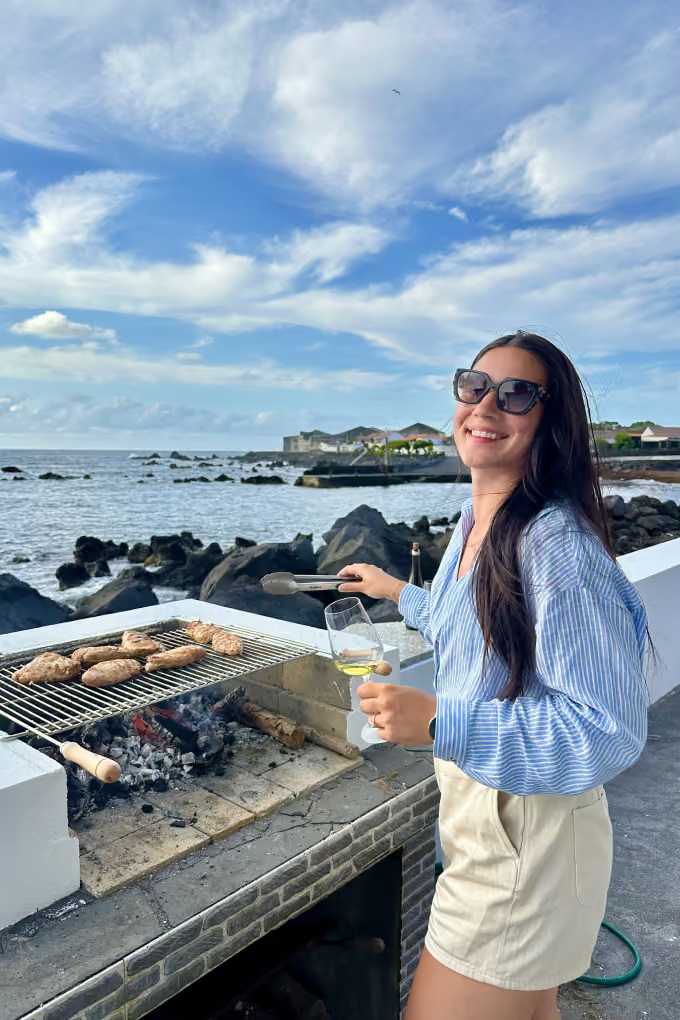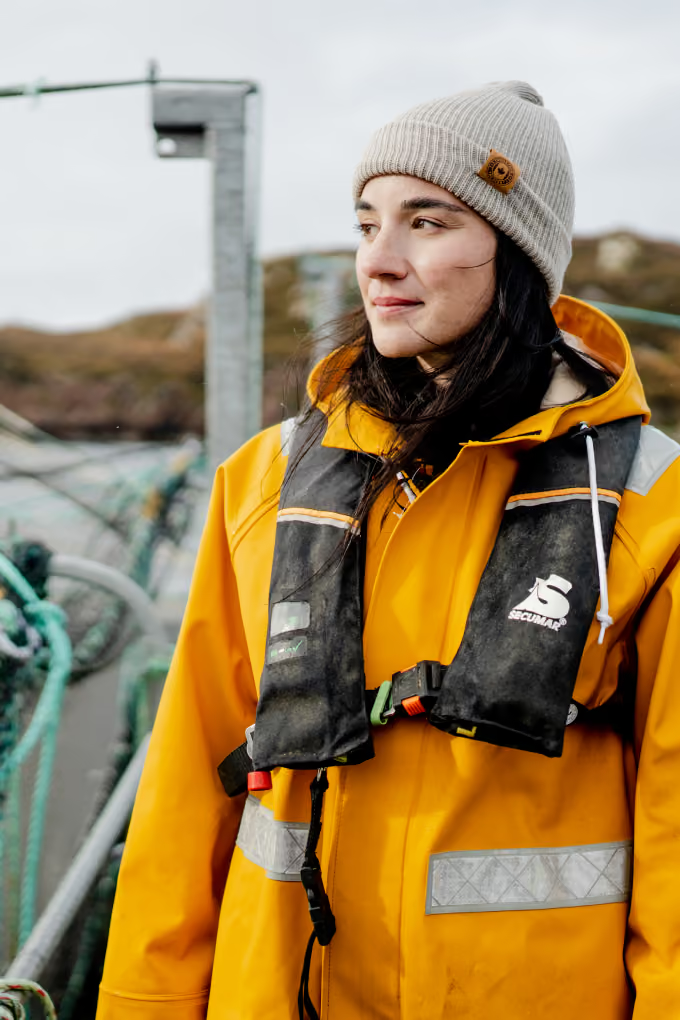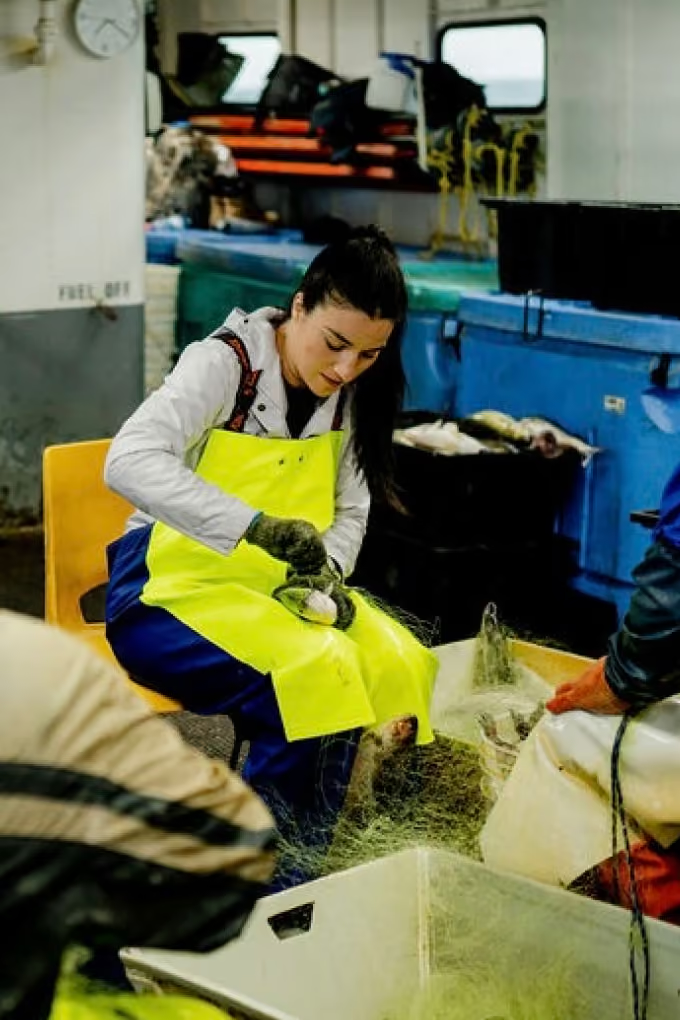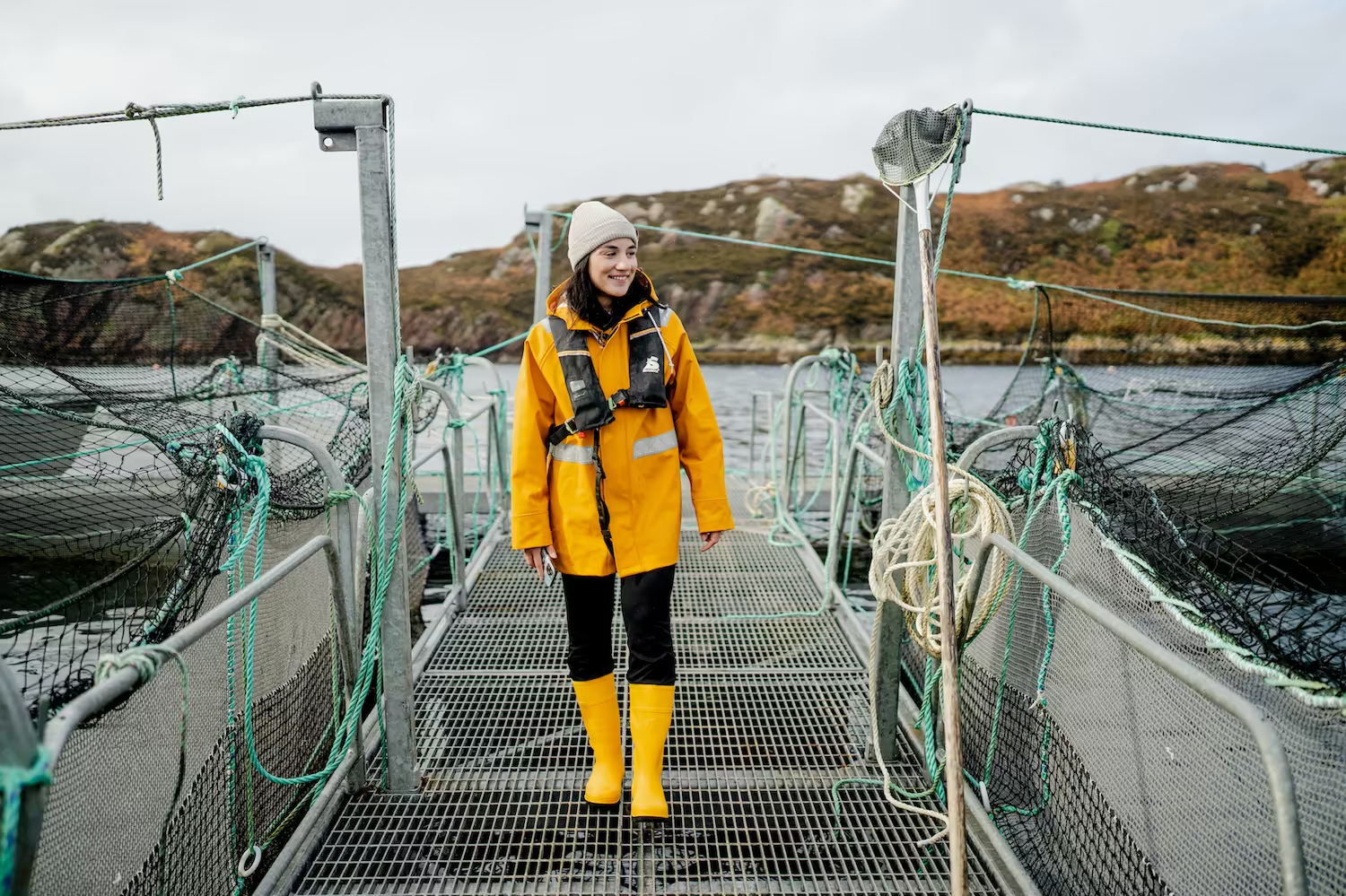
If you've ever stood at the seafood counter feeling a little guilty for reaching for the farmed fillet instead of the wild one, this post is for you. Somewhere along the way, "wild" became shorthand for good and "farmed" became shorthand for lesser — and honestly, it's one of the biggest misunderstandings in seafood.
So let's clear it up together. The truth is that farmed and wild seafood aren't rivals. They're teammates. We need both to feed the world, protect the ocean, and keep delicious, nutritious seafood on our plates. Neither one is inherently better than the other — they just do different jobs.
Here's what that actually means when you're shopping.
"Which is better — wild or farmed?" is the wrong question
The wild-vs-farmed debate has raged for decades, and it's gotten us pretty much nowhere.
Both sides feed people. Both can be done responsibly. And both can be done badly, too. Whether a piece of seafood is a good choice has almost nothing to do with which category it falls into, and almost everything to do with how it was raised or caught. Once you stop asking "which is better?" and start asking "was this produced well?", the whole seafood counter gets a lot less intimidating.
The real answer to the debate is refreshingly simple: we need both. Let me show you why.
First, a reality check on how much seafood we eat
Humans love seafood, and we're eating more of it than ever. According to the FAO's State of World Fisheries and Aquaculture 2026, the world now produces around 235 million tonnes of fish and other aquatic animals a year — an all-time high. Nearly 90% of that goes straight to feeding people, and the average person now eats about 21 kilograms of seafood a year, another record. All told, aquatic foods supply a meaningful share of animal protein for roughly 3.1 billion people.
There is simply no way the ocean alone could keep up with that demand — not without emptying it. Wild seafood alone can't feed a growing planet, and the good news is that it doesn't have to. Which brings us to the quiet revolution that's already happened.
The moment farming caught up with fishing
For the first time in history, we now farm more seafood than we catch. In 2024, aquaculture (that's farmed seafood) produced about 53% of all the aquatic animals we grow for food — officially overtaking wild capture fisheries, which held steady at roughly the other half.
Aquaculture isn't the future of seafood anymore. It's already the present. And that's a good thing. Every farmed fish, oyster, or shrimp is one we didn't have to pull from a wild population. Farming lets us meet soaring demand without asking the ocean to give more than it can.
Wild fishing isn't going anywhere — nor should it
If farming is doing so much of the heavy lifting, do we still need wild fisheries? Absolutely. And they're in better shape than the doom-and-gloom headlines suggest.
As of the most recent global assessment in SOFIA 2026, about 73% of the world's wild seafood is caught from healthy, biologically sustainable stocks. Well-managed wild fishing is also one of the lowest-impact ways to get protein on the entire planet — no feed, no farmland, no fresh water, and a carbon footprint that puts most land-based meat to shame. The goal was never to replace wild fishing. The goal is balance.
Why we need both
Wild and farmed each bring something to the table that the other simply can't. That's the heart of it.
The case for wild: some of the finest delicacies in the world come from wild fisheries. Spot prawns, tuna, octopus, swordfish, lobster — species that are unique, seasonal, and nearly impossible to replicate on a farm. Wild fishing also connects us to coastal communities that have worked the water for generations, carrying flavours and traditions no hatchery can reproduce.
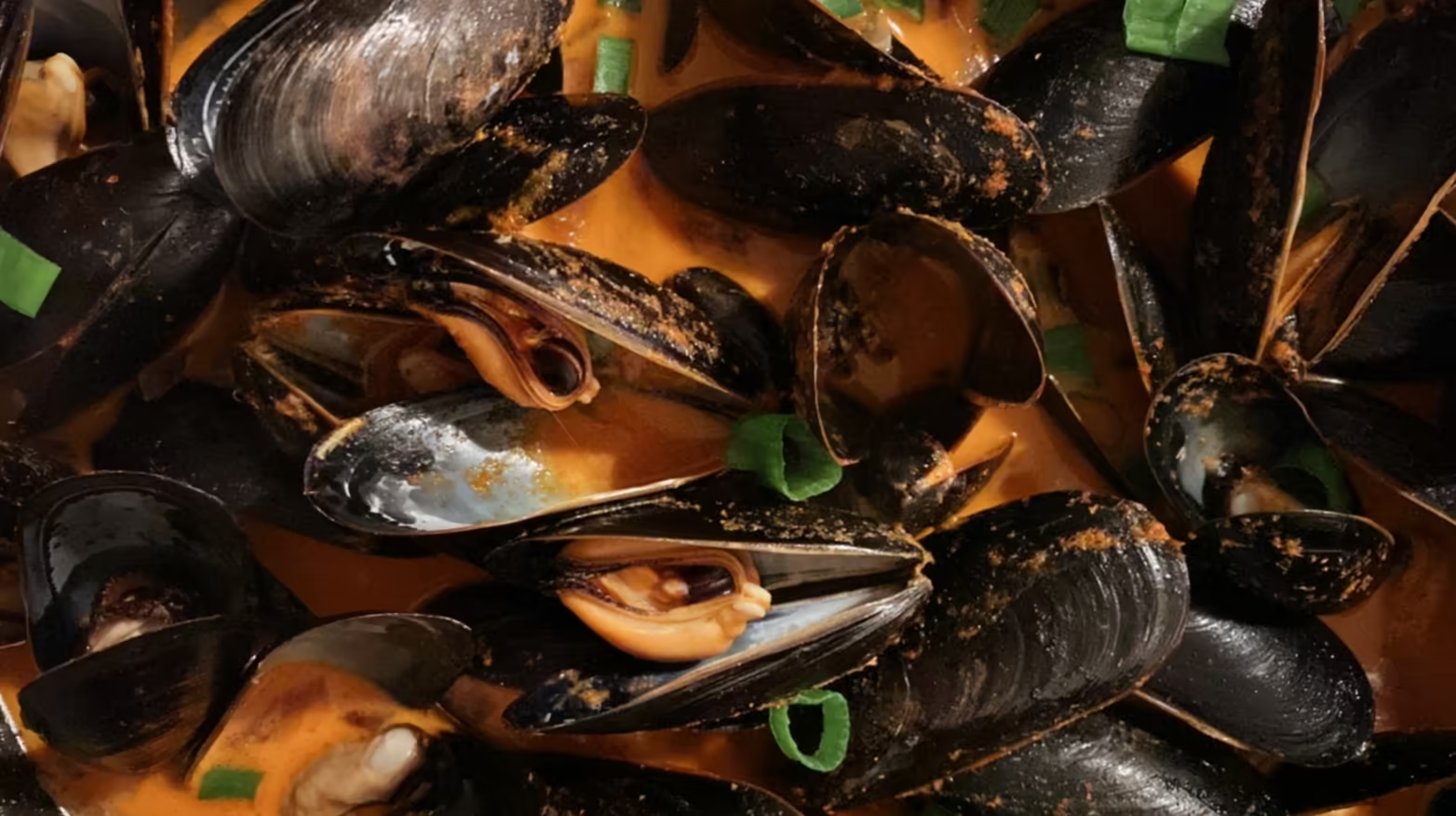
The case for farmed: some of the most sustainable seafood on the planet also comes from farms. Farmed mussels, oysters, and clams need no feed, no land, and no fresh water — and as they grow, they actually filter and clean the water around them. It genuinely doesn't get much lower-impact than that. On top of the environmental win, farming gives us a steady, year-round, affordable supply and can be produced close to home.
Put simply: wild fishing has a natural ceiling, and farming is how we responsibly grow the rest. Lean on only one, and you either overfish the oceans or leave a lot of people without an affordable, healthy source of protein. Together, they cover for each other's limits.
But what about taste?
Here's a myth worth busting on the flavour front too: neither one tastes "better." They taste different.
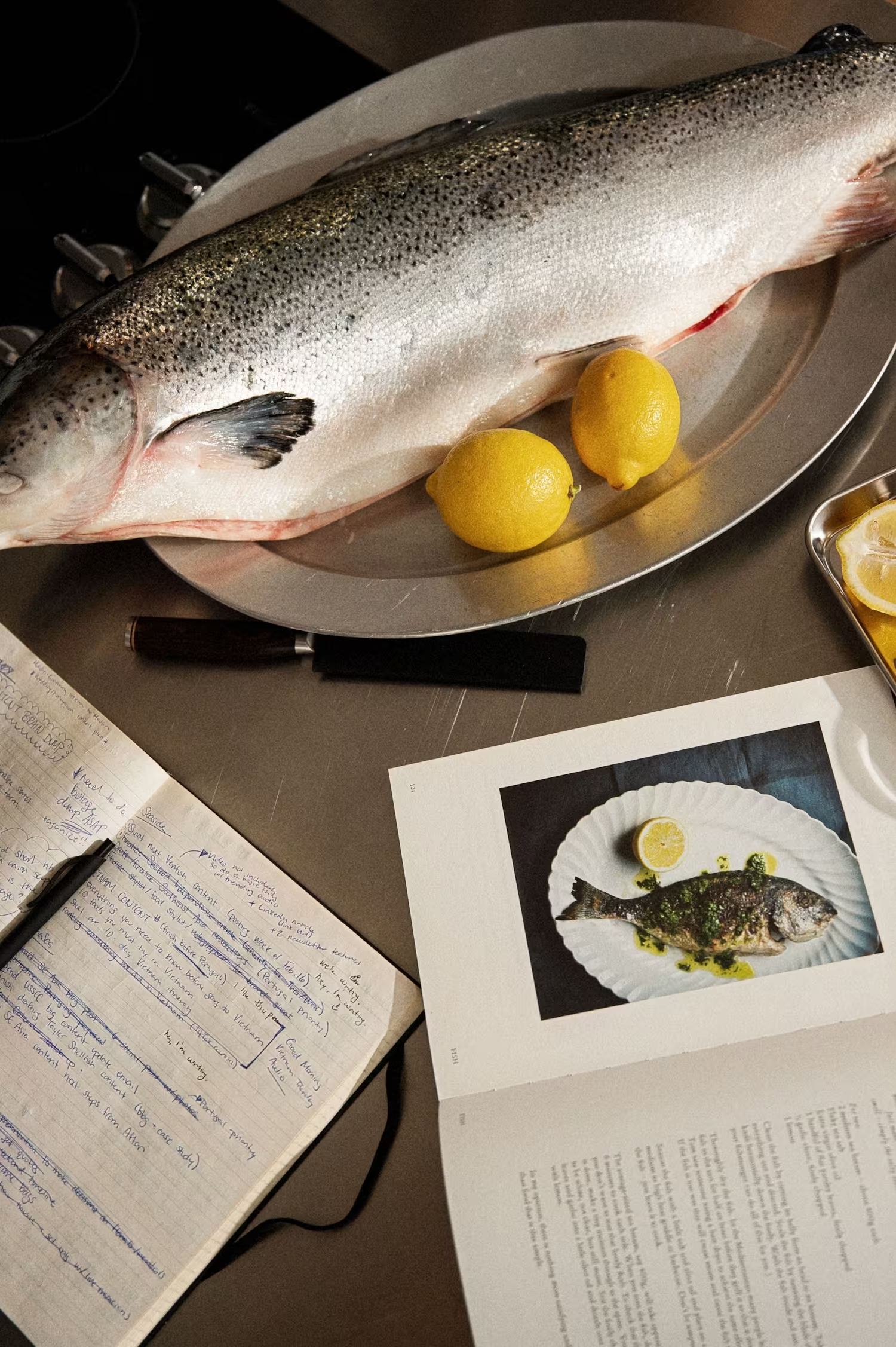
Take salmon, the classic comparison. Farmed salmon is often milder and fattier — in part because it's raised to be that way, for a consistent, approachable flavour every time you cook it. Wild salmon tends to be leaner, with a more pronounced, sometimes "fishier" taste — because in the wild, nature decides what it eats and how it lives, and we don't have that control.
Neither is the "right" answer. It comes down to what you prefer — and that's exactly why having both is a gift, not a compromise. It means there's an option for every palate, every recipe, and every budget.
And is one actually healthier than the other?
Both farmed and wild seafood are excellent sources of lean protein and heart-healthy omega-3s. The nutritional differences between them are real but small, and they vary more by species and season than by the farmed-or-wild label. Farmed fish are sometimes higher in total fat (and omega-3s along with it); wild fish are often leaner. Neither of those makes one "healthy" and the other "not."
And honestly, the bigger issue is that most of us in North America don't eat enough seafood in the first place — which means we're missing out on nutrients we could genuinely use more of, like omega-3s, vitamin D, and B12. So the real win isn't agonizing over wild versus farmed. It's simply eating more seafood, full stop. The best fish for your health is the one you'll actually cook and enjoy this week.
How to shop with confidence
You don't need a marine biology degree to make a good choice. Here's the short version:
- Judge by how it was raised or caught — not the category. A responsibly farmed fillet can be a better choice than a poorly managed wild one, and vice versa.
- Look for credible certifications. MSC on wild seafood, and ASC or BAP on farmed, mean an independent body checked the sourcing.
- Ask your fishmonger for more information. Where is it from? How was it produced? A good seafood seller will happily tell you.
- Try a diversity of species. Buying a variety — some wild, some farmed — spreads out demand, keeps your meals interesting, and introduces you to new favourites.
The bottom line
Farmed and wild seafood aren't a competition, and you don't have to pick a side. Together, they feed a growing planet, take pressure off wild stocks, and give you options at the counter. One eases the strain on our oceans; the other keeps us connected to them.
So the next time you're at the seafood counter, breathe easy. Choose the fish that's fresh, responsibly sourced, and exciting to cook — wild or farmed. You're making a good choice either way.