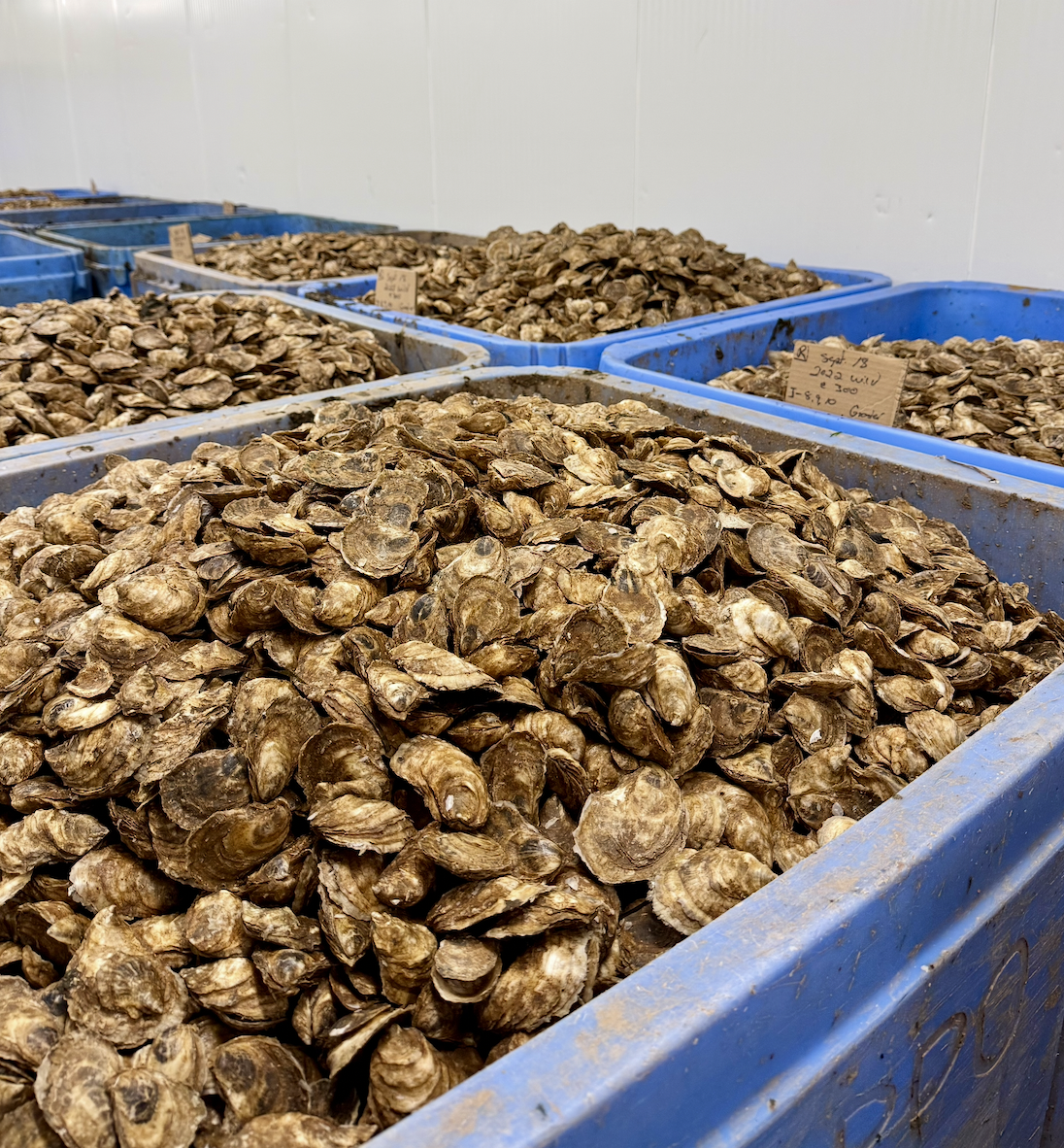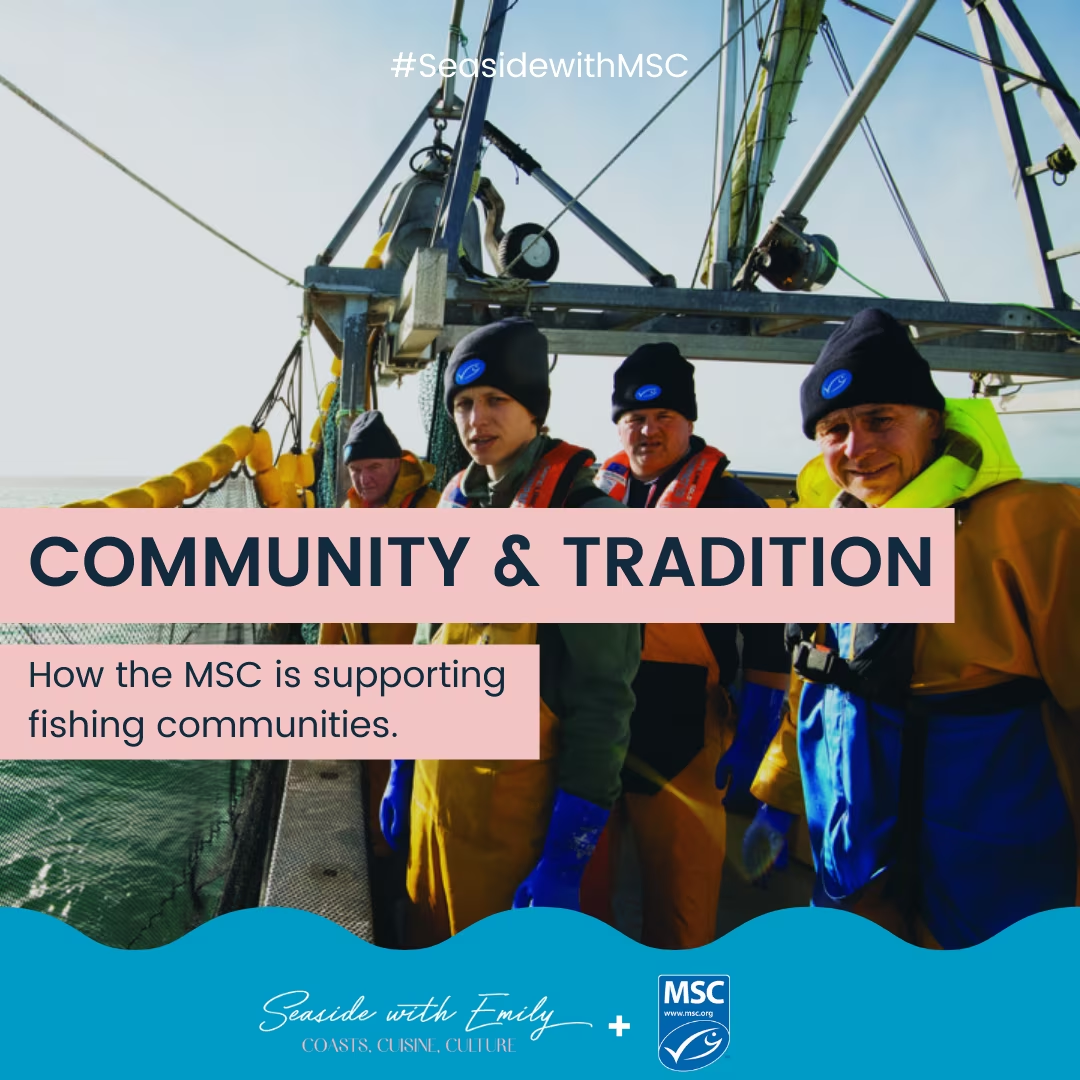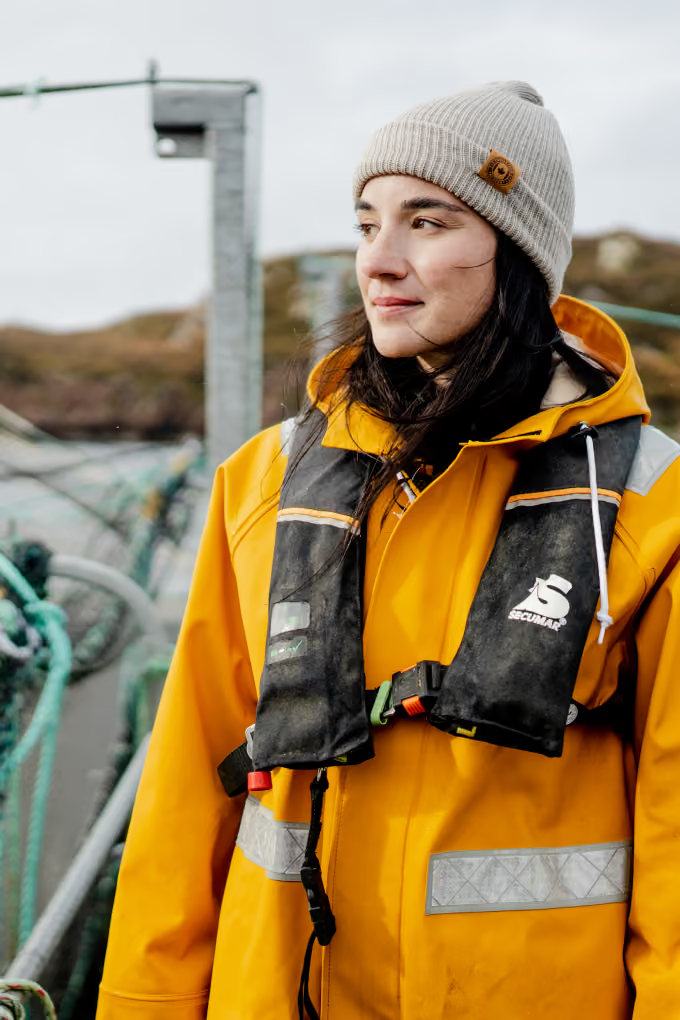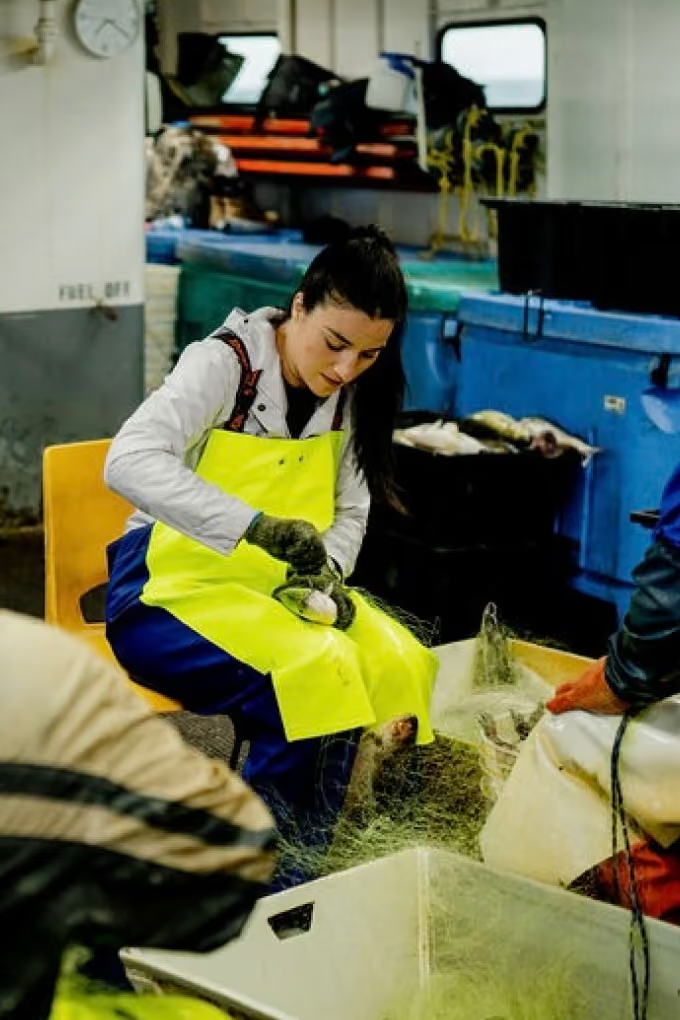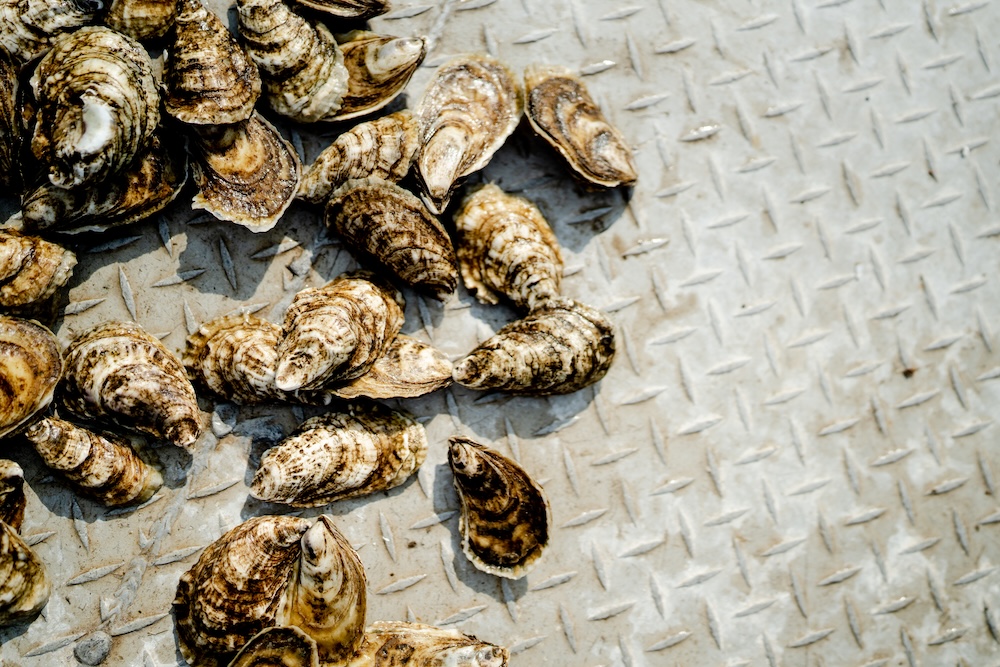
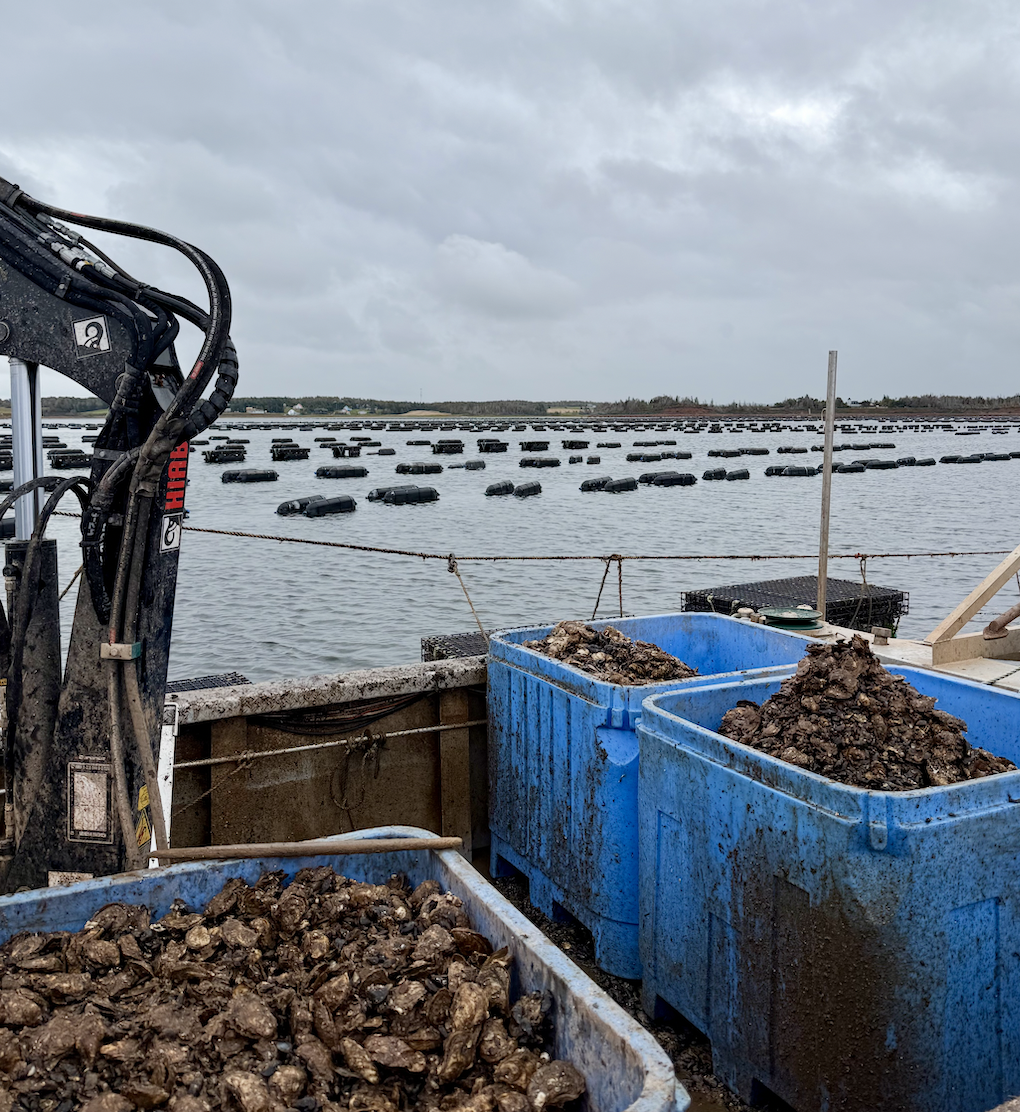
The rope comes up first. Green with seaweed, dripping, it breaks the surface beside the boat and gets hooked onto the winch. Then the cage. It rises slowly, streaming water, heavy with oysters. The crew hauls it aboard and shakes the shells out onto an overturned bucket for us to inspect.
The shh shh that the oysters make while the farmer moves the basket back and forth is like oyster ASMR, I think to myself. As the oysters rattle out onto the bucket, my heart leaps in anticipation. I hope that these guys will be okay.
This isn’t the first oyster cage we’ve pulled up today. It’s the fourth. And the three before it all came up with open oyster shells. Dead oysters. In cages carrying three year old oysters ready for harvest and cages carrying three week old oysters just beginning their journey. No one is immune.
"Where we would normally pull out the dead ones and let the live ones go through to the facility to be graded, some days it's easier to just pull out the live ones, because there's so many dead ones." the farmer tells me with a sigh as he tosses the empty shells over the side of the boat. This particular farm is seeing mortality as high as 70% on its farm, a number that’s only grown over the last 14 months. So, it will likely be 100% as it already is for some farms in PEI.
The culprit is a parasite called MSX. And it's rewriting the future of one of Canada's most famous oysters.
An island built on oysters
Oysters are part of PEI's identity. The island started leasing water for oyster fishing back in 1865, with more formal oyster farming practices following in the early 1900s.
It's a $27-million industry, supporting around 300 farmers, 250 wild fishermen and 18 processors. The oyster bars, the restaurants, the festivals and the summer tourism all trickle out from the oyster industry.
And the oysters are world renowned. Malpeque oysters first gained international fame when they won first place at the Paris World Fair in 1900. Today, you can find PEI oysters on restaurant menus across the world. Names like Malpeque, Raspberry Point, Lucky Lime, and Valley Pearl have become household names for oyster lovers.
Now, for the second time in a century, PEI's oysters are dying.
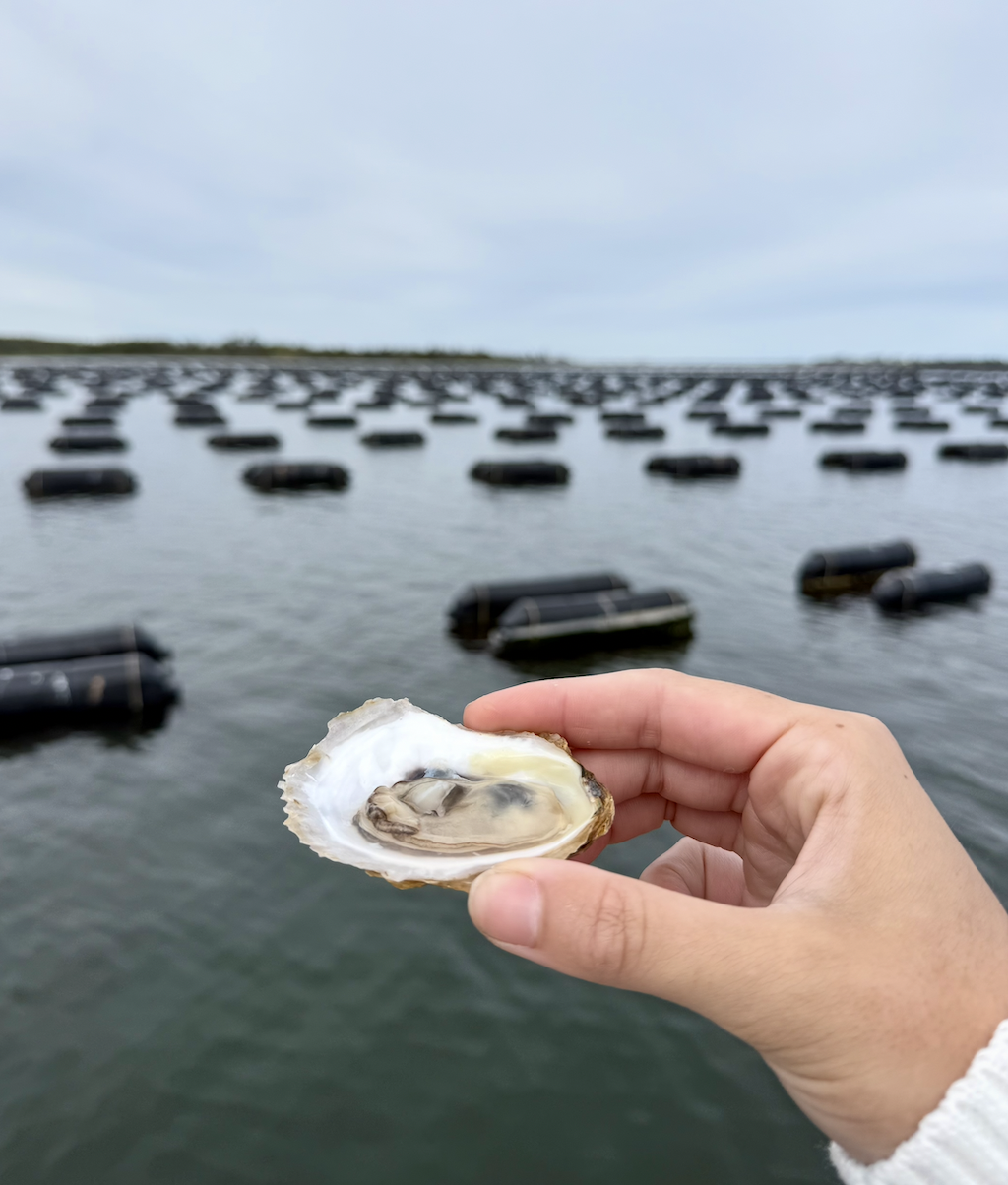
What is MSX, and how did it get to PEI?
MSX stands for multinucleate sphere unknown. Scientists named it that because, when they first spotted it under the microscope, they didn't know what it was. Today we know it as Haplosporidium nelsoni, a single-celled parasite.
It's been around for decades. MSX was first discovered in Delaware Bay in 1957 and soon hit Chesapeake Bay, wiping out oysters in both. Chesapeake left recovery to nature. It took more than 20 years, and oyster numbers never fully came back.
MSX reached Canada in 2002, in the Bras d'Or Lake on Cape Breton Island, Nova Scotia. Since then it has been detected in New Brunswick, Newfoundland and Labrador, and Quebec too.
MSX is a parasite that goes after the digestive system, so an infected oyster can't build glycogen, the energy reserve it needs to get through winter. It grows more slowly. It weakens. And when winter comes, it has nothing to live on. It essentially starves to death.
Big disclaimer, because I know you’re all wondering: MSX does not affect humans. It's not a food safety issue. PEI oysters are safe to eat. MSX only harms oysters. It kills them long before they ever get to our plates. Which is the challenge PEI farmers are currently grappling with.
MSX was first confirmed in PEI in July 2024, in Bedeque Bay on the island's western end.
Within a year, it had spread along the coastlines. Today, MSX has reached almost every oyster bed on the island.
The losses are staggering. Mortality has passed 95 per cent in parts of western PEI. At the hatchery I visited in Bideford, they actually think the number is closer to 98 percent in the hardest hit areas.
PEI's winters make it worse. Every November, farmers sink their cages to the bottom. The bays freeze over, and the oysters go dormant under the ice for about six months, living off what they stored up in summer. An oyster with MSX goes into winter with nothing stored. No reserve going in means no oyster coming out in April.
Warmer water and less food are adding to the pressure. And the wild beds are thinning in a way that feeds itself. Oysters spawn together, cued by each other. Spread them too thin and spawning turns random, so fewer baby oysters settle each year.
As of now, scientists have no idea how MSX moves from oyster to oyster. Scientists believe a second, unidentified host carries it between them, and no one has found it yet. What they do know is that once MSX is in the water, there is currently no way to get rid of it. The only way to fight it is by building resistance. This can happen naturally - literally natural selection - where over time, only the oysters that can overcome MSX will be left and as they breed, they will naturally breed MSX resistant oysters.
The problem is, this will take years - potentially decades. And the population may never fully recover, like it didn’t in the Chesapeake. So, farmers and scientists have come up with a solution that can address the issue with more urgency: an MSX-resistant oyster seed.
This June, the first MSX-resistant seed imported from Maine went into PEI water. Atlantic Aqua Farms is currently the only company approved by the Canadian Food Inspection Agency (CFIA) to bring it onto the island and it sells the seed on to other growers. The farms trialling it are seeing real promise.
Now comes the real test: winter. Maine oysters are dormant for about three months. PEI oysters need to survive a winter that lasts nearly six months. Can the new seed fatten up enough to make it to spring? We'll find out in April.
If it does, the first resistant oysters could reach the market in a couple years.
Rebuilding once again
This isn’t the first time that PEI has faced a mass mortality event.
In 1915, a mystery disease tore through Malpeque Bay. It killed up to 99 per cent of the oysters and spread across Atlantic Canada. It's still called Malpeque disease, after the bay where it started.
Within a few years, the oyster fishery had all but disappeared. And the origin of the disease was never found.
By some miracle, some of the oysters in Malpeque Bay survived. Growers collected seed from those survivors and spread it to bays across the island. In the late 1920s, a young federal biologist named Alfred Needler took charge of the oyster research station at Ellerslie, and the work of rebuilding became a science. It still took decades.
The survivors were naturally resistant, and they rebuilt the population. Today's PEI oysters descend from them. Resilience is already bred into these oysters. PEI has come back before.
The Future of PEI oysters
So what do the next few years look like for PEI oysters? As of now, the MSX-resistant seed that was brought in from Maine is in the water. But, the growers know this is just a temporary solution. In order to truly build resilience in the oyster fishery, longer term efforts are underway.
Building PEI's own
Imported seed is a bridge. The long-term goal is an MSX-resistant oyster bred right here, and local Atlantic Canadian hatcheries are working on it.
Research is moving fast. In September, Atlantic Aqua Farms, Onda and CAT Genetics launched a $1.1-million project to develop MSX-resistant oysters and disease-prediction tools on PEI. Breeding a resistant island line takes about three generations, roughly six years.
The Bideford Shellfish Hatchery, which I visited on the trip, is leading that charge. In 2025, its team bred oysters that survived the Bedeque Bay outbreak and produced what it calls the first MSX-resistant oyster seed in Canada. It's the same playbook used in Chesapeake Bay and Long Island Sound: take the survivors of an outbreak and breed them into a new stock line. The hatchery's geneticist, Guy Perry, expected about 70 per cent of that seed to survive, in bays where MSX has killed nearly everything. The hatchery produced 25 million seed in 2025 and is aiming for 90 million in the coming years.
It isn't a sure thing yet. Researchers caution that it's hard to know whether a young oyster is truly resistant until it's been tested in the water, and the industry is waiting to see how the seed performs. Island seed is also cheaper than the Maine seed, but until it's proven, many farmers are wary of betting a year's crop on it.
Scaling up is slow, too. "An oyster hatchery is an algae hatchery with oysters in it, because it's all about producing the food," one of the hatchery team told me. And PEI's short summer gives the hatchery about three spawns a year. Warmer regions get closer to 50.
Six years sounds long. Chesapeake Bay left it to nature, and nature took more than 20.
Government support
Both levels of government have stepped in:
- Provincial: A $3-million aquaculture contingency fund for 2025–26, followed in January 2026 by $9.2 million in income relief for growers and inventory support for processors.
- Federal: In May 2026, $4.2 million to help PEI growers cover the cost of resistant seed, $1.5 million to speed up import approvals, and $6 million for a buy-back program for wild harvesters' licences.
What happens in the meantime
Oysters take time. In PEI they usually need three to four years to reach market size. So even if everything works, the next couple of years will be lean.
Here's what that means when you order:
- PEI oysters may be harder to find. Supply will be tight while resistant seed grows out.
- They'll be smaller. Farmers are harvesting a little earlier to get oysters out of the water before MSX gets them. Expect more cocktails and petites.
- Shells may be more brittle. Oysters reach size in about two years, but that third year is what hardens the shell. Harvest early and shells can crack at the shucking knife. Be patient with your shucker.
None of that means PEI oysters are going away. It means they're rebuilding, and rebuilding takes time.
How you can help
- Keep ordering PEI oysters when you can. They're safe and they're delicious. Demand keeps farms running while resistant seed takes hold.
- Say yes to the small ones. Cocktails and petites are the smart order right now. Every dozen helps keep a farm afloat.
- Eat other PEI seafood. Many oyster farmers also grow mussels or process other island shellfish. Choosing PEI seafood helps carry them through the oyster losses.
Nobody can promise how this ends. The Maine seed still has to survive its first PEI winter. The island's own line is years from proven. And not every farm will make it to the other side.
But in April, the cages will come back up and hopefully some of those cages will hold oysters bred to beat MSX.
PEI came back once before. I'm betting it can do it again.