Fish Are Food — and Livelihoods
More than 3 billion people rely on seafood as their primary source of protein. Not a special occasion protein. Not a weekend splurge. A daily staple — the backbone of food security for nearly half the planet. And that number is only growing.
Let’s bring in the actual definition of food security, per the UN’s Food and Agriculture Organization:
“Food security exists when all people, at all times, have physical and economic access to sufficient, safe and nutritious food that meets their dietary needs and food preferences for an active and healthy life.”
That last part is key: food preferences. Because when the vegan movement claims plant-based diets are the only sustainable solution, it conveniently erases the fact that not everyone can — or wants to — eat that way.
For some, plant-based diets lead to nutrient deficiencies, low energy, and impaired cognitive function. For others, the cost or cultural disconnect makes them inaccessible.
If a person is forced to eat food that doesn’t meet their nutritional needs or that they don’t enjoy, they are not food secure. Forcing veganism on someone who doesn't want it — or can't thrive on it — directly contradicts the very principles of food justice.
The Planetary Argument
Yes, climate change is real. Yes, our food system must evolve. But if we’re talking environmental impact, seafood — particularly farmed bivalves like mussels and oysters, and small pelagics — is one of the lowest-impact foods on the planet.
We’re talking:
- Minimal land use
- Low freshwater consumption
- Extremely low greenhouse gas emissions
- Dense, bioavailable nutrients and omega-3s
Try to name another food that offers all of that. You can’t — not without major trade-offs.
What Happens If We Eliminate Seafood?
Let’s play it out. The dream of a fully vegan world becomes reality. What happens to those 3+ billion people?
What do they eat? Where do we grow all those replacement crops? With what water, on what land, and at what cost?
My family is from an island in the middle of the Atlantic. Growing conditions are tough. Inputs are expensive. Imports are unreliable. A plant-based utopia? Not feasible. We’d quite literally be written out of the future.
And even in ideal growing conditions, the math ain't mathing.
Estimates show we’d need to clear an area the size of Spain to grow enough plant-based protein to replace global seafood consumption. That’s not environmental progress. That’s ecological collapse.
The Human Cost of Vegan Absolutism
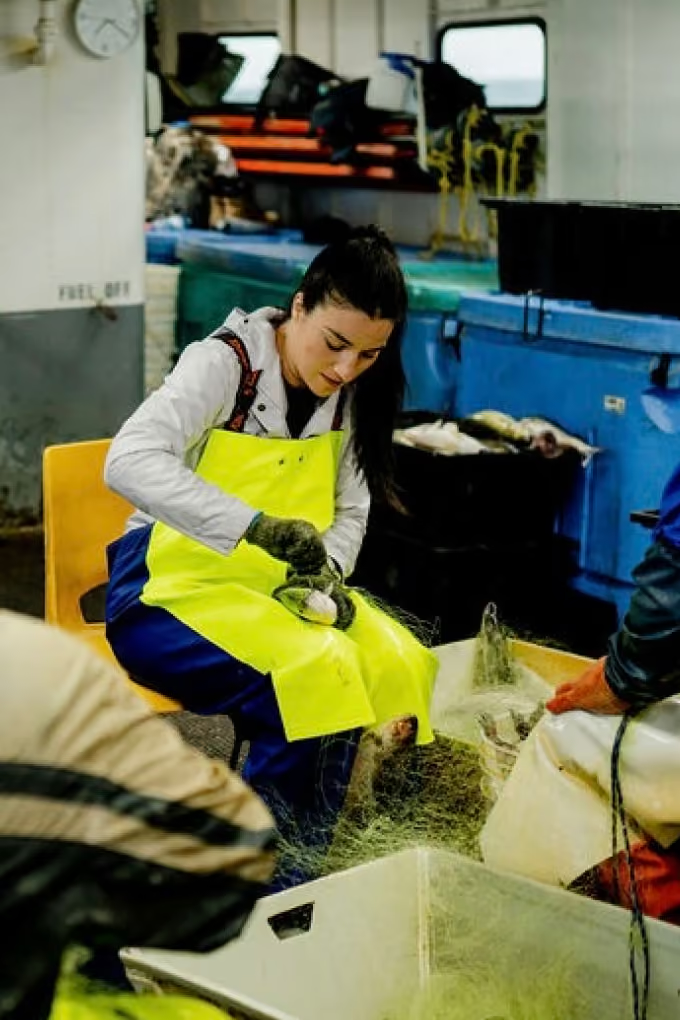
Seafood doesn’t just feed people — it employs them. Hundreds of millions of people around the world, particularly many in the Global South, rely on seafood jobs to support their families.
To suggest, from your desk in America, that they should all “just grow lentils” instead?
That’s not activism. That’s privilege. And a hell of a lot of ignorance.
It’s easy to boycott seafood when your fridge is full. It’s a different story entirely when seafood is how your children eat and your community survives.
Veganism Is Not the Universal Solution
This post isn’t a personal attack on vegans. Eat what you want. But pushing a vegan diet as the only moral or sustainable option is not just wrong — it’s harmful. It erases global food systems, economic realities, and science.
I’m here to bring transparency, context, and science to the conversation — something sorely lacking in these absolutist arguments.
Seafood is not the enemy. It’s part of the solution — if we care enough to engage with the complexity.
So to the next person who tells me the only way to save the planet is to go vegan: I suggest you do some actual research. Or better yet — go visit the coastal communities you’re so eager to erase. :)