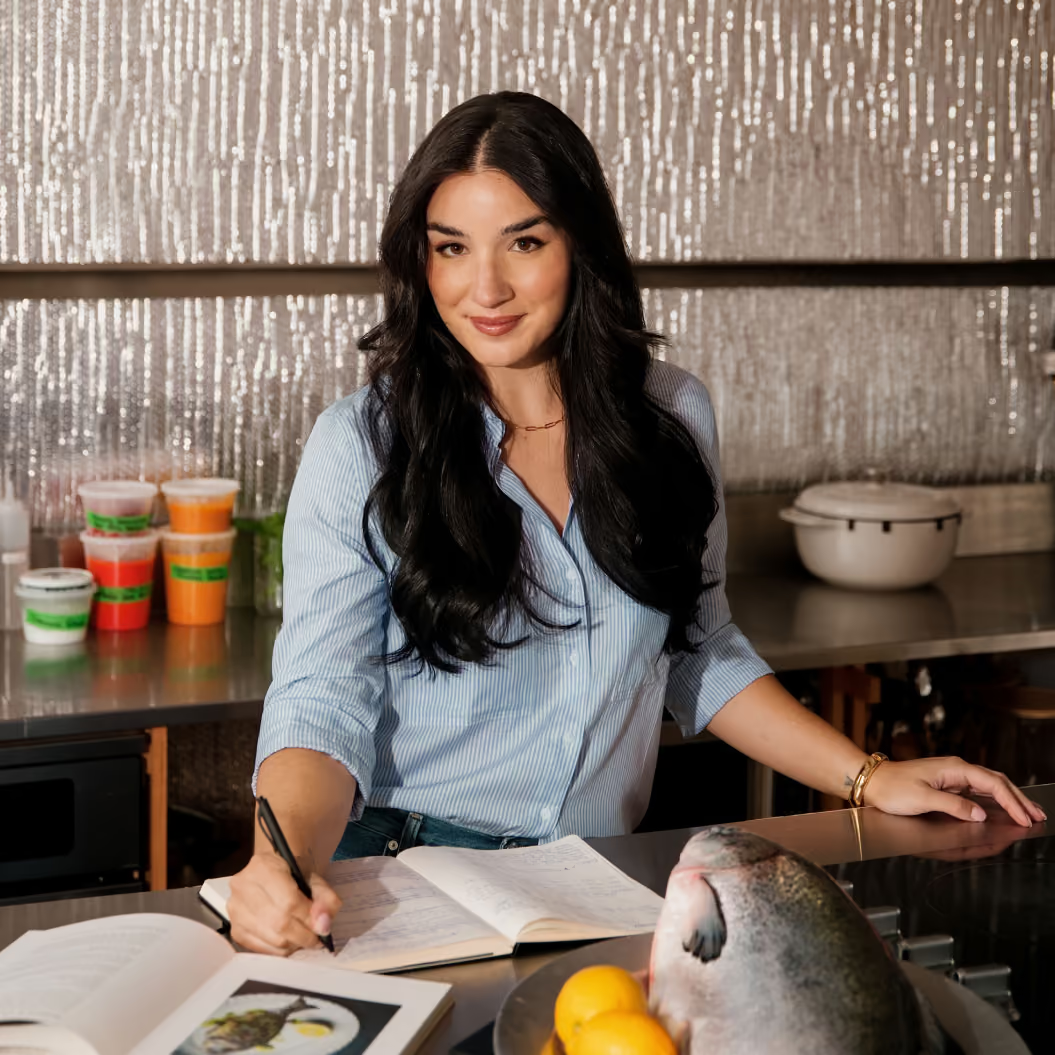
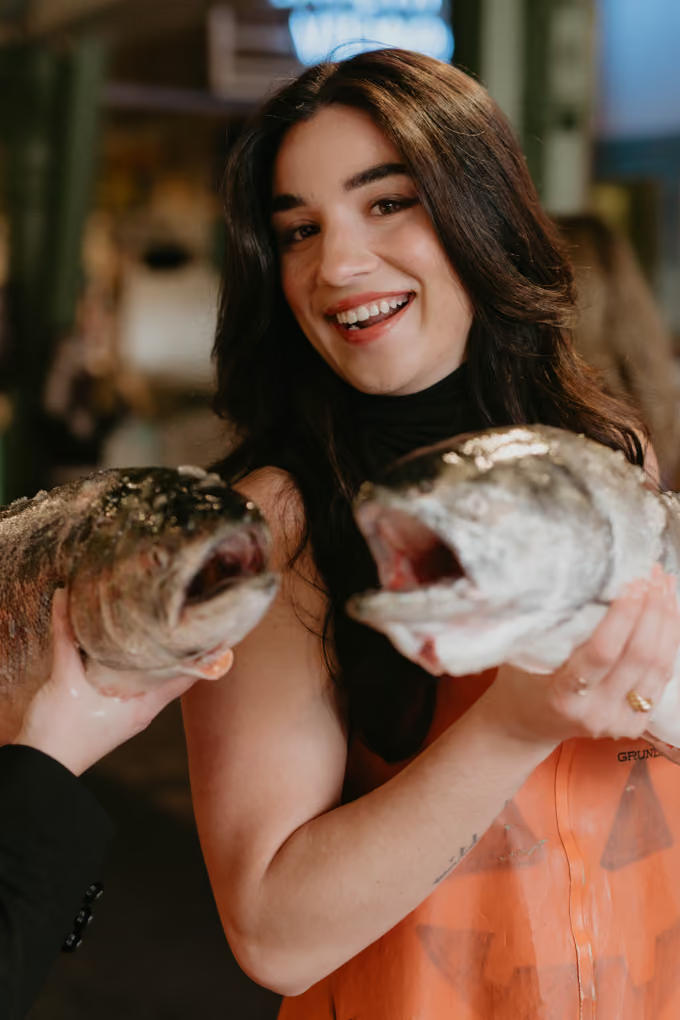
I just came back from a week at the Culinary Institute of America, where I took part in their 4-day Seafood Bootcamp with Chef Chris Muller.
It’s funny, because I came here knowing seafood. I’ve spent nearly a decade working in this industry. I know the stories, the systems, the sourcing, the sustainability conversations, the species, the supply chains. But being here has reminded me that knowing seafood and cooking seafood really, really well are two very different things.
So this is my little diary of the week. The things I learned, the moments that humbled me, and the little kitchen truths I want to remember before my feet stop hurting and my chef coat stops smelling like fish.
Day One
Day one felt like being dropped into a world where every tiny detail matters (a lot more than I realized!)
We learned how to humanely kill a lobster and break it down properly - watch the video and stop boiling lobsters alive, you maniacs. I appreciated that right off the hop, nothing was treated casually and there was a big focus on where seafood comes from and how to handle these animals respectfully.
Alongside lobster butchery, day one also hammered home a ton of basic kitchen etiquette.
Prepping ingredients ahead of time, or mise en place. Doing so on a clean cutting board. Keeping your workspace uncluttered. Taking care to make sure your knife cuts are uniform.
I got a quick reminder that when chefs say “small dice,” they do not mean “close enough.” They mean small. And even. And clean. And consistent.
I also learned tomato concassé today, which was one of those classic techniques I’ve definitely heard floating around but never actually took the time to understand. Very chef school. Very “oh, so this is how people who actually know what they’re doing do it.”
But maybe the biggest thing I noticed today had less to do with seafood and more to do with culture. CIA treats hospitality like a serious profession, and you feel that immediately. Students are in business casual on campus. In the kitchen, Chef whites must be buttoned up properly. Standards. Precision. A sense that feeding people is a privilege, not just a task. There’s something kind of beautiful about that. It’s easy to see why this is the best culinary school in the world.
The other thing that was drilled into us today was timing. Prep everything ahead. Fire food at the last possible second. Be ready before you need to be ready. As someone who thought she had decent instincts for timing because I host a lot… I realized today that I have been living a much more chaotic version of that principle.
My absolute biggest takeaway from day one though?
I could never be a professional chef. I’ll be a great home cook and hostess, but I do not have what it takes to work in a professional kitchen. After 6 hours in the kitchen, I was EXHAUSTED.
Day Two
Today was the day I realized how often people ruin good food by doing too much.
The plating lesson really stuck with me, mostly because I have always been notoriously bad at plating.
We were told that plating gets messed up most of the time because there’s simply too much food on the plate. And honestly, that makes sense. I do have a tendency to pile my plates as high as possible, so today was really a class in restraint. Respect the plate. Respect the inner rim. Give the food room. Let it look like it belongs there.
We also worked on scallops, and I picked up a technique I know I’ll remember forever: lightly flour scallops for a better, crisp sear, then finish them in the oven instead of trying to aggressively cook both sides in the pan. I love seared scallops, but have always had a hard time getting that perfect crisp sear. Now, I know how. There are so many little tricks in professional kitchens that make things just click.
Another great reminder from today was that recipes are suggestions, not gospel. That felt deeply relevant because I do think a lot of home cooks want certainty. A recipe says 12 minutes, so you give it 12 minutes and trust. But today was a good reminder that cooking asks you to pay attention - ahem, use your own brain. Open the oven. Check the pan. Use your senses. Taste. Taste again. Taste more. Adjust. The recipe is not in charge. You are.
We also got a tip for easier oyster shucking: a super quick dip in boiling water, then into an ice bath. I’m bracing to see how my oyster shucker friends will react to this one. I was admittedly a bit skeptical, but it did work! Not sure I’ll be putting this one to use in public, but I’ll be keeping it in my back pocket.
I ended the day feeling like I’m starting to understand how much of cooking well is really editing, adjusting, and being flexible. Editing the plate. Editing the seasoning. Editing your instinct to overdo it.
Day Three
Today may have permanently changed the way I think about oil.
Chef said, “Olive oil is a flavor.” Which, yes. I understand. But I supposed I’d never seriously considered how the flavour of olive oil was impacting the food I was cooking in olive oil.
I know it sounds obvious, but I don’t think I had ever really thought about it that clearly. Of course olive oil has flavor. Of course that flavor becomes part of the dish. But I think so many of us default to cooking with it because it feels elevated or healthy or we’ve been scared away from using the other oils(?!). Meanwhile, the real question should be: do you actually want the thing you’re cooking to taste like olive oil?
The line that Chef burned into my brain was: “If you want the carrot to taste like carrot, cook it in a neutral oil. If you want it to taste like olive oil, cook it in olive oil. And if you want it to taste delicious, cook it in butter.”
We also worked on tuna today, and I learned that if you want a true rare sear, you start from cold, not room temp. Pull it out of the fridge right before you’re ready to cook it. Which is funny, because this week is making me realize that cooking rules are real, except when they’re not. Because aside from tuna steaks, you should actually temper your fish - aka pull it out of the fridge 20-30 minutes before you want to cook it to bring it to room temp so it will cook more evenly.
Trust the process… except when the process changes based on the outcome you want.
Like I said on day two, cooking is about being flexible.
I also learned more about properly searing fish skin, which frankly felt personal because crispy fish skin is one of those things that looks effortless when chefs do it and has always been my achilles heel in the kitchen. The big takeaway: don’t force it. Use a substantial amount of oil. Shake the pan. Let the fish release on its own. If it’s stuck, it’s not ready. Don’t go digging at it like a maniac. (Guilty).
That might actually be useful both as a cooking lesson and maybe as a life philosophy.
There was also a lot of emphasis on finishing fish in the oven after a hard initial sear, especially when the quality is high and you don’t want to over-handle it. Again, this week is showing me how much finesse matters. Good cooking is not always more action. Sometimes it’s less.
And quickly back to temp: sashimi should be eaten at room temperature because cold dulls the flavor. Same as wine. That made immediate sense to me.
Tonight I feel like my brain is rewiring itself around the difference between heat and control. Just because you can blast something in a pan doesn’t mean you should.
Remember, you’re the chef, so you’re in charge. Not the recipe, not the oven, YOU!
Day Four
By today, I started feeling a little less like I was just trying to survive and a little more like I was actually absorbing things.
Today we spent quite a bit of time on knife skills and fish butchery, and I was reminded again that knife work is such a huge part of confidence in the kitchen. Not just cutting things, but knowing how to use the whole knife, knowing which part of the blade serves which purpose, and moving with more intention - especially when butchering fish.
There’s such a difference between hacking away at something and actually working with it.
A lot of today also focused on station setup for service, and I’m realizing how much elegance in the kitchen comes down to preparation. When people plate beautifully and move quickly, it’s not because they’re magically more graceful than everyone else. It’s because they set themselves up properly. Prep, prep, prep - that’s why mise en place was the first thing we learned on day one.
There were also a few wonderfully random but memorable lessons today. Putting tomatoes or other produce in a container with a banana to speed up ripening. Soy sauce oxidizing and changing flavor after it’s been open for a while. Oil roux versus butter roux, which I genuinely did not know enough about before today. Apparently oil is better for something like gumbo, while butter is better for gravy. Tiny culinary details that make me realize how much deeper this world goes than most people ever see.
At this point in the week, I’m feeling both more confident and more humbled, which is probably exactly how I’m supposed to feel.
Also, side note: CIA really knows how to make you feel taken care of. The jackets, the tote, the water bottle, the bakery coffee — all very charming. Very dangerous for me, a person who loves an elevated little touch.
Final Thoughts
This week has been so incredibly educational and also very humbling - reminding me that being good at something in one context does not automatically mean being great at it in another.
I know seafood. I have a degree in it. I’ve worked in this space for nearly a decade. I know this space deeply. But this week has made me look at seafood through the eyes of a chef, and that perspective is different. Very different. And I know that better understanding that perspective is going to go a long way in making me an even better, more well-rounded seafood professional (in addition to an amazing home chef!)
It has also reminded me how much joy there is in being a beginner again, or at least in being beginner-ish.
I am a lifelong learner and while day one I did kind of feel like a fish out of water (pun intended), I’m glad I pushed myself out of my comfort zone, because this was one of the most rewarding experiences of my life.
And honestly, this is all part of what makes seafood so interesting to me in the first place. There is always another layer. Another skill. Another way to better understand the ingredient and do right by it.
Anyway, that’s the diary for now. My feet hurt, my brain is full, and I have learned a lot.