The Tinned Fish Dinner Party: A Coastal Menu You Can Pull Off in 30 Minutes
Last August, I had eight people arriving at my place in forty-five minutes and nothing resembling a plan.
I'd been out running errands all afternoon. By the time I got home, there was no time for a grocery run, no time for a complicated recipe, no time for anything except whatever I could pull from the pantry and the fridge.
What I pulled: five or six tins, a half-eaten block of good cheese, a bag of pasta, some crackers, a bottle of white wine from the cellar, and whatever herbs were still alive in the little pot on my windowsill.
What I made: a fantastic summer evening.
Everyone stayed until midnight. Multiple people asked for details on the seacuterie board. Friends texted me the next day for the pasta recipe.
This is what I've come to understand about entertaining with tinned fish: it doesn't ask you to perform. It asks you to relax. And a relaxed host — genuinely relaxed, not performing relaxedness — is the best thing you can offer your guests.
Here is the full menu, with everything you need to know.
The menu
To start: Tinned fish board — the full build Main: Anchovy butter spaghetti with breadcrumbs Side: Smoked mackerel and white bean salad
Everything can be on the table in 30 minutes. Most of it can be prepared while your guests are already eating and drinking, which is the whole point.
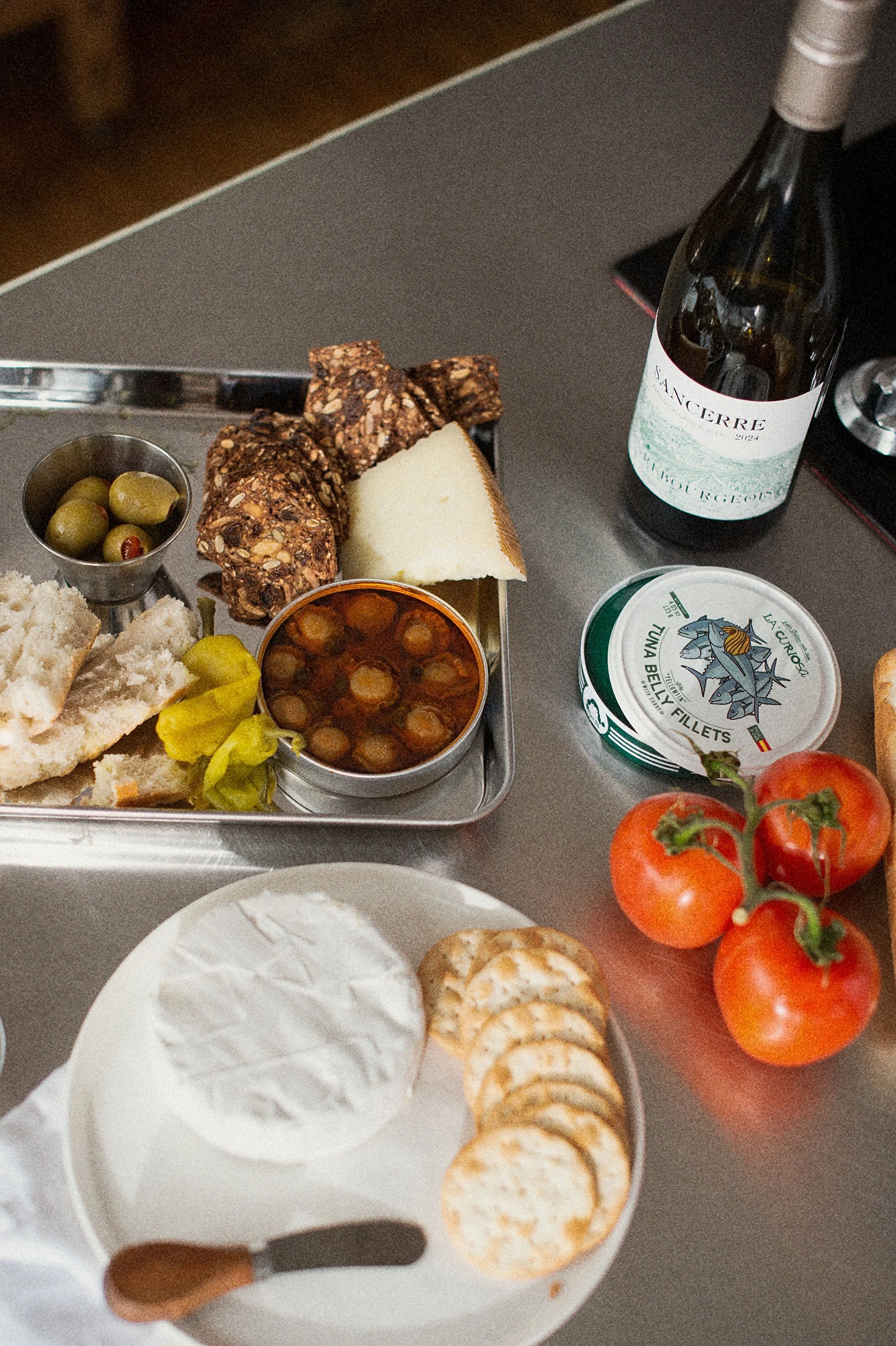
The tinned fish board
For 4–6 people as a starter
This is the centrepiece. It should look like you put hours into it. You will spend twelve minutes.
What you need
The tins (choose 3–4):
1 tin good sardines (Pinhais sardines in olive oil are my go-to)
1 tin of razor clams or oysters (Conservas da Cambodas are exceptional)
1 tin smoked mussels or octopus (Matiz)
1 tin smoked salmon or mackerel (optional, if you want something more substantial)
The vehicles:
1 good baguette, sliced (lightly toast if you have five minutes)
A selection of crackers — something plain (water cracker) and something with seeds or flavour (Raincoast Crisps are my staple)
The condiments and accompaniments:
Cornichons (a generous pile)
Good Dijon mustard (just a small spoonful in a ramekin is elegant)
Small wedge of salted butter, scored with a fork
1 lemon, cut into small wedges
A few thin slices of cucumber or radish
Cherry tomatoes (leave them whole, they look beautiful)
Cheese (go with whatever you have on hand)
Olives (same as above)
The finishes:
Good olive oil to drizzle
Flaky salt (Maldon)
Fresh dill or flat-leaf parsley
A pinch of chilli flakes if you like heat
How to build it
There is no wrong way to build a board. There is only a formula, and once you know it, you'll never stress about it again.
Start with your anchors. Place the tins first — open them, arrange them on the board. Let people see what they're eating.
Fill in with bulk. Crackers and bread go in clusters. A pile of crackers in one corner, a stack of baguette slices in another. This gives the board structure.
Add the condiments in vessels. Small ramekins or bowls for the mustard, capers, and cornichons. This prevents the board from looking like a mess and makes it easier for guests to serve themselves.
Scatter the fresh elements last. Cherry tomatoes, cucumber slices, lemon wedges. These add colour and freshness — drop them in any gaps between the structured elements.
Finish and dress. A drizzle of good olive oil over the sardines. A pinch of flaky salt. A few sprigs of dill. This is the step that makes the board look like you know what you're doing.
Serve immediately. The board is best fresh. Have it ready on the table as guests arrive.
The wine
For the board specifically: something cold, crunchy, and acidic.
Albariño is the natural pairing — it's what they drink in the fishing villages where much of this fish comes from. Vermentino (Sardinia or Corsica) is equally good. A crisp Muscadet from the Loire works beautifully with the sardines. If you want bubbles, a Cava or Crémant is perfect.
Avoid heavy whites or anything oaky. The fish is delicate; it needs wine that gets out of the way.
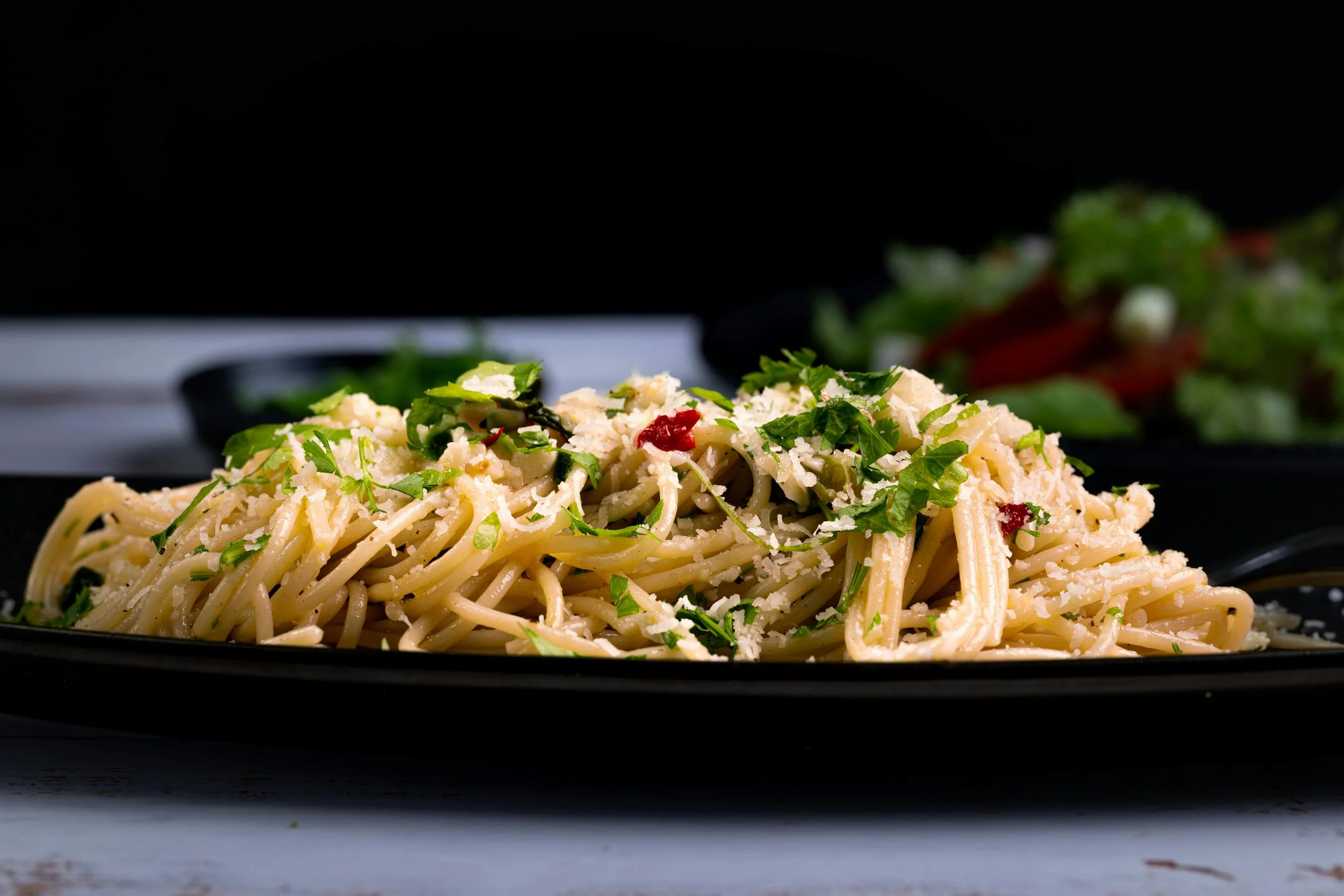
Anchovy butter spaghetti with crispy breadcrumbs
Serves 4 | 18–20 minutes from start to finish
This is a simple pasta dish elevated to dinner party status by tinned fish.
The anchovy butter sauce has no "recipe" in the traditional sense. It's a technique. Anchovies melt into butter and garlic, and that becomes the sauce. The pasta water ties everything together. Once you've made it twice, you'll make it from memory.
Ingredients
400g spaghetti
8–10 anchovy fillets, plus 2–3 tablespoons of the oil from the tin
4 cloves garlic, thinly sliced
80g good butter, divided
1 teaspoon dried chilli flakes (or to taste)
100g panko breadcrumbs
Zest of 1 lemon
Large handful of flat-leaf parsley, roughly chopped
Parmesan, for serving
Sea salt and black pepper
Method
Make the crispy breadcrumbs first. Heat a splash of olive oil (or use the anchovy oil from the tin) in a small frying pan over medium-high heat. Add the breadcrumbs and toss to coat. Cook, stirring frequently, until golden and crisp — about 4–5 minutes. Remove from heat, season with salt, and set aside. They will stay crisp for a couple of hours.
Cook the pasta. Bring a large pot of heavily salted water to a boil. Cook spaghetti according to package instructions, until just al dente. Before draining, scoop out a full cup of pasta water. Reserve it — you'll need it.
Make the sauce while the pasta cooks. In a large pan (wide enough to toss the pasta in later), melt 60g of the butter over medium-low heat. Add the anchovy fillets and the chilli flakes. Stir and press the anchovies — they'll dissolve into the butter in about 2–3 minutes. Don't rush this; a low heat prevents browning.
Add the garlic. Cook gently for another 2 minutes until the garlic is soft and fragrant but not coloured.
Combine. Add the drained pasta directly to the pan. Add a large splash of pasta water — about half a cup. Toss vigorously over medium heat until the pasta is coated and the sauce is silky. Add the remaining 20g of butter and toss again. The sauce should coat the pasta generously; if it looks dry, add more pasta water and toss.
Finish. Turn off the heat. Add the lemon zest and most of the parsley. Toss once more.
To serve. Divide among warm bowls. Top each portion with a generous handful of the crispy breadcrumbs, more parsley, a small grating of parmesan, and a crack of black pepper. Serve immediately — the breadcrumbs lose their crunch quickly.
Notes
The anchovies will completely disappear into the sauce. This is the magic. There will be no visible anchovy; there will only be a sauce that tastes amazing and makes people ask what's in it. Tell them whatever you like.
Smoked mackerel and white bean salad
Serves 4–6 as a side | 10 minutes
This salad does three things: it adds a vegetable element to a meal that otherwise has almost none, it provides a textural contrast to the pasta, and it takes approximately as long to make as it takes to open a tin and drain a can of beans.
It also sits happily at room temperature for an hour, which means you can make it before your guests arrive and forget about it.
Ingredients
2 tins smoked mackerel in olive oil, drained and flaked
2 × 400g tins white beans (cannellini or butter beans), drained and rinsed
1 small red onion, very finely sliced
2 stalks celery, finely sliced (leaves reserved if you have them)
1 tablespoon capers, roughly chopped
Large handful of flat-leaf parsley
Zest and juice of 1 lemon
3 tablespoons good olive oil
1 teaspoon Dijon mustard
Salt and black pepper
Method
Make the dressing first. Whisk together the lemon juice, olive oil, and Dijon mustard. Season well with salt and pepper. Taste. Adjust.
Build the salad. In a large bowl, combine the white beans, red onion, celery, capers, and parsley. Add the dressing and toss gently to coat.
Add the mackerel. Flake the smoked mackerel over the top of the salad in large pieces — don't over-mix, you want chunks, not mush.
Finish. Scatter over the lemon zest and any celery leaves. A final drizzle of olive oil. Taste for seasoning.
Serve at room temperature. This salad is best not cold — if it's been in the fridge, take it out twenty minutes before serving.
Note
This works as a standalone lunch the next day, if you have leftovers. Add a soft-boiled egg and some good bread. Actually, this might be better as a lunch than a dinner side. Make extra.
The 30-minute timeline
Here's how to run the menu without stress:
T-30 minutes: Open all tins. Start pasta water.
T-25 minutes: Make crispy breadcrumbs. Set aside.
T-20 minutes: Build the board. Don't touch it again.
T-18 minutes: Guests arrive. Open wine. The board is already on the table.
T-15 minutes: While guests eat and drink, start the anchovy butter sauce. Cook pasta.
T-10 minutes: Make the mackerel salad while the pasta finishes.
T-5 minutes: Toss and plate the pasta. Bring it to the table.
T-0: Sit down. Eat. Accept compliments.
The spirit of it
When you spend six hours cooking a complicated meal, the dinner party becomes about the cooking. Guests feel obligated to acknowledge the effort. There's a performance of gratitude on one side and a performance of nonchalance on the other. It's slightly exhausting, even when it's lovely.
When you build a board and toss some pasta, the dinner party becomes about the people. Nobody is talking about how hard the food was to make, because it wasn't. They're talking to each other. You're at the table with them, not hovering in the kitchen. The conversation is the dinner.
Tinned fish makes this possible. Preserved things — good preserved things, made with care and packed with intention — carry the flavour so you don't have to. Your job is to show up, open some tins, pour some wine, and be present.
It turns out that's the best thing you can offer anyone.