The Complete Guide to Tinned Fish: What to Buy, How to Eat It, and Why It's Having a Moment
There's a tin of anchovies in my pantry that cost me eleven dollars and has quietly improved almost everything I've cooked in the last year. It's gone into pasta, melted into compound butter, disappeared into a salad dressing, and — on one particularly inspired Tuesday evening — been eaten straight from the tin with a glass of white wine and a piece of sourdough.
This is what tinned fish does when you let it. It becomes the best thing in the kitchen.
I didn’t come to tinned fish; tinned fish came with me. I’m Portuguese, which is to say I’m from the motherland of the tin. Sardines packed in olive oil, mackerel in tomato sauce, tuna in escabeche — these were the lunches my avó pulled out of the cupboard when I was small, the snacks slid onto a plate with crusty bread and butter, the things my family stacked into suitcases on flights back from the Azores.
This guide is partly a love letter and an invitation to pull up a chair at the table I grew up at.
If you're new to this world, welcome. If you're already a convert and just want to know more — also welcome. This is everything I've learned.
Why tinned fish is having a moment
Tinned fish has been a staple of Mediterranean and Atlantic coastal cuisine for over a century. The Romans preserved fish in salt. The Portuguese have been canning sardines since the 1880s. In Japan, the idea of carefully preserved fish, deeply seasoned, packed with patience, is embedded in the food culture. None of this is new.
What's new is that North America, Gen Z, and TikTok have finally caught up.
A few things happened at once. The pandemic created home cooks who were bored and adventurous and had time to seek out interesting pantry ingredients. The natural wine movement normalized a certain kind of casual, unselfconscious eating — the board, the tin, the glass of something cold. Sustainability conversations made people curious about lower-footprint proteins. And a wave of beautiful, design-forward tinned fish brands (Fishwife, Jose Gourmet, Scout) made the product visually compelling in a way that translated perfectly to social media.
The trend might be new, but the product has stood the test of time. The anchovies you can buy today are not new or different from the anchovies Catalan grandmothers have been putting in their cooking for generations. We just finally started paying attention.
The sustainability case
Before we get to what to buy, it's worth saying: tinned fish is one of the most sustainable proteins available.
Small oily fish — sardines, anchovies, mackerel — reproduce quickly, exist in large populations, and sit low on the food chain. They require minimal land, no freshwater, and dramatically less energy to produce per gram of protein than land-based meat. Many of the best tinned fish brands source from certified sustainable fisheries (look for MSC certification) and are transparent about their fishing methods.
The canning process itself is also worth noting. Tins have an extraordinarily long shelf life without refrigeration, which means virtually zero food waste. The product is caught, processed, and packed at peak quality. There's no supply chain degradation the way there is with fresh fish.
Eating well and eating sustainably don't always align. In the case of tinned fish, they do.
How to read a tinned fish label
Not all tins are created equal, and knowing what to look for is the difference between a grocery store disappointment and something genuinely wonderful.
The packing medium matters enormously. Extra virgin olive oil is the gold standard. It adds richness, flavour, and healthy fats — and it's delicious to dip bread into afterwards. Water or brine is the leanest option but can produce a drier result. If you see "vegetable oil" with no further specification, assume sunflower.
Look for a vintage or catch date. Some high-quality tinned fish — particularly Spanish and Portuguese sardines — improve with age, like wine. A tin from two or three years ago may be richer and more complex than a freshly packed one. Some specialty producers actually vintage their sardines and sell them that way.
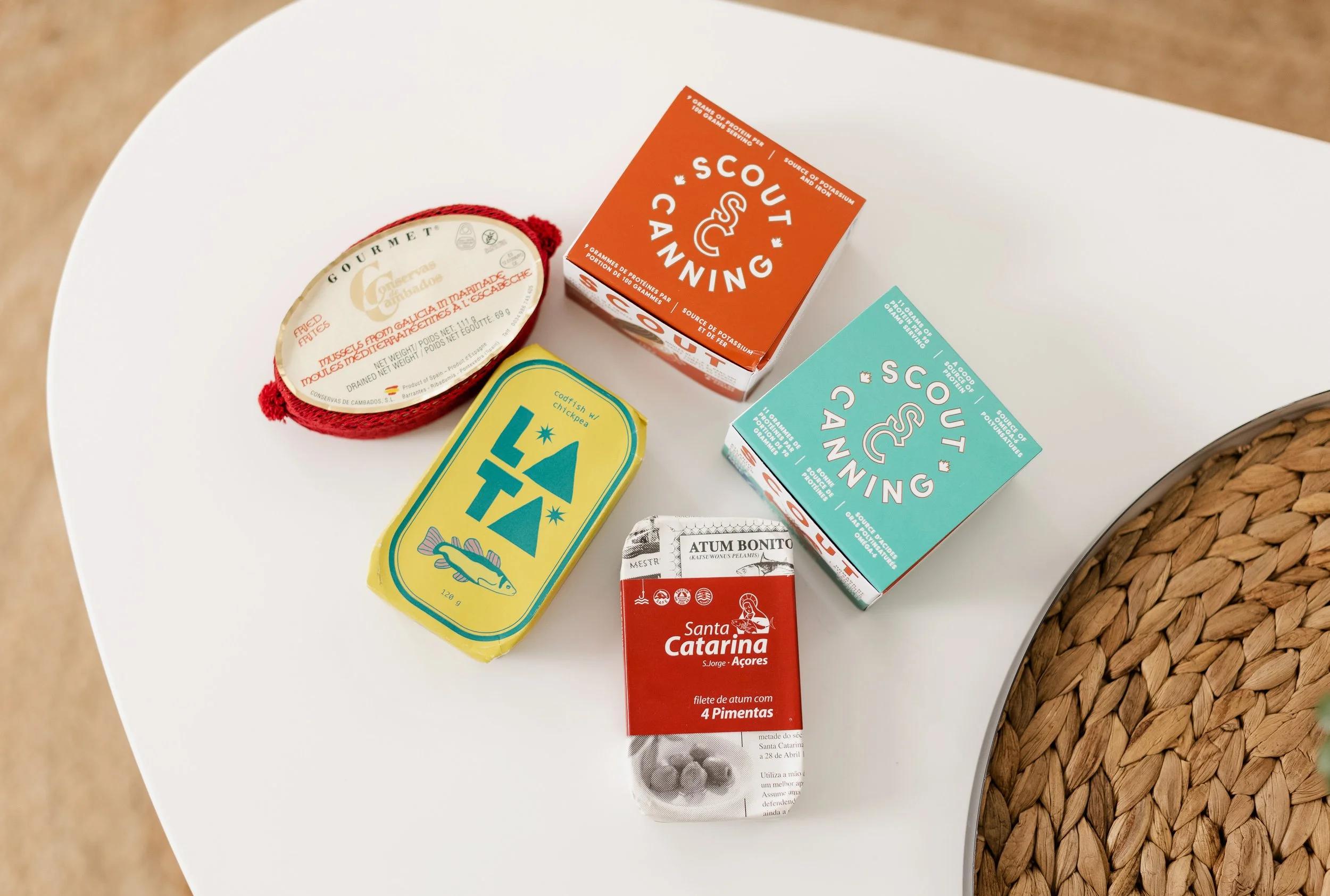
Pay attention to the country of origin and species specificity. The best tins tell you where the fish came from, how it was caught (line-caught, hand-packed), and what species it is.
The categories: what's in a great tinned fish pantry
Anchovies
The backbone of the tinned fish world. Anchovies divide people — usually because they've only encountered the bad kind, the mushy, overly salty strips on a mediocre pizza. A great anchovy is nothing like that.
The best anchovies are salt-cured for months before being packed in olive oil. They're complex, umami-rich, faintly sweet, deeply savoury — they melt into heat and transform everything they touch. They don't taste fishy; they taste like depth.
How to use them: Melt into butter and toss with pasta. Drape over sourdough with good butter and a squeeze of lemon. Whisk into Caesar dressing. Lay over pizza before baking. Add one or two to any braise or tomato sauce.
Sardines
Sardines are the gateway fish, the one most people start with and the one with the most range. They're affordable, nutritious (high in omega-3, calcium, and vitamin D), and genuinely delicious when you buy the right ones.
There's a real spectrum here. Budget supermarket sardines are edible. Mid-range brands like Bela, La Belle-Iloise, or Matiz are where it starts getting interesting. At the premium end — José Gourmet, Conservas Pinhais, Briosa — sardines become something you eat with full attention, the way you eat a good piece of cheese. (Pinhais are my personal tried and true favourite sardines ever.)
How to use them: On toast with butter, mustard, and a squeeze of lemon. On a board with cheese and good crackers. In a simple salad with white beans, parsley, and red onion. Mashed into a spread with cream cheese and capers.
Mackerel
Mackerel is one of the most flavourful fish in the sea, and one of the most sustainably abundant. It's also criminally underrated in tinned form. Hot take: I prefer mackerel to sardines.
Smoked mackerel has a deep, peaty, warming flavour that works brilliantly in cooler months. Mackerel in tomato sauce is a different thing entirely — more acidic, more Portuguese-grandmother-cooking energy. Plain mackerel in olive oil is perhaps the most versatile.
How to use it: Flake smoked mackerel into a potato salad. Make mackerel pâté: flake the fish, mix with cream cheese, lemon zest, horseradish, and dill. Add to fishcakes. Serve on rye bread with pickled cucumbers.
Tuna
Here's where I'll lose some people: cheap canned tuna is not tinned fish in the sense we're talking about. Albacore or yellowfin tuna packed in high-quality olive oil, hand-filleted — that is tinned fish.
The difference is staggering. Good tinned tuna is silky, moist, and deeply flavoured. It flakes into large, beautiful pieces. It needs almost no intervention. Eating it on a cracker with a few capers is a genuinely pleasurable experience.
How to use it: Classic niçoise. Pasta with tuna, capers, and lemon. The Italian merenda — tinned tuna, white beans, red onion, and olive oil. Or simply: a solid tuna sandwich.
The wild cards: octopus, mussels, clams, and more
This is where the category gets genuinely exciting.
Octopus (pulpo):Güeyu Mar makes an extraordinary tinned octopus that may truly be my favourite tinned seafood product in the entire world. Tender, flavourful, completely unlike the rubbery disappointment you get at a bad seafood restaurant. You will hear gasps when you serve this.
Smoked mussels: An acquired taste for some, but devotees are evangelical. Serve on crackers with a little hot sauce or aioli. Look for mussels from New Zealand (Greenshell) or Spain.
Razor clams: A genuinely special product, particularly from Galicia. Beautiful to look at, delicate in flavour. Worth seeking out for a special board.
Smoked oysters: The wildly divisive tin. I'm a believer. Smoked oysters on a cracker with cream cheese and hot sauce is unhinged and perfect.
Salmon:Wildfish Cannery has done a lot to elevate tinned smoked salmon. It's a great product at a premium price, but so worth it for entertaining.
How to eat tinned fish: the fundamental approach
The best thing you can do with tinned fish is to get out of its way.
This is food that has been caught, cleaned, cooked, seasoned, and packed with skill. It doesn't need a complicated recipe. It needs a vehicle (good bread, crackers, pasta), an acid (lemon, capers, cornichons, pickled onions), a fat (butter, olive oil, cream cheese), and something fresh (herbs, cucumber, tomatoes).
That formula — preserved fish + acid + fat + fresh — works for virtually any combination of tins you have.
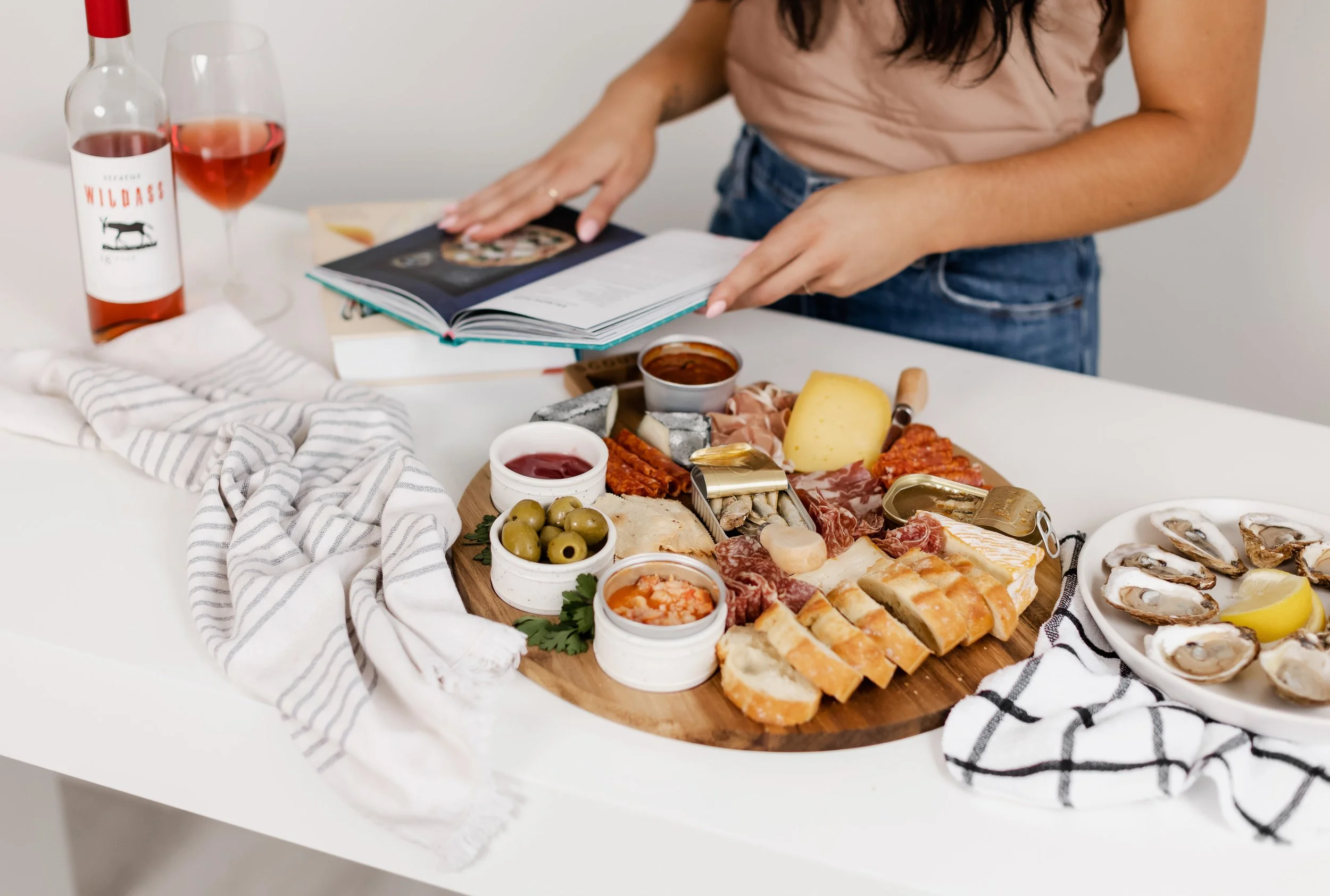
The tinned fish board is the purest expression of this. No cooking required. Buy good bread and good crackers, open a few tins, add some condiments and accompaniments, pour something cold to drink, and let the fish speak.
Tinned fish asks you to eat differently. Not better in a self-improving way — differently in the way of sitting down, opening something, and paying attention to what's inside. It's the anti-UberEats. It's the opposite of eating while scrolling.
Tinned fish makes the ordinary feel like exactly enough.