In the seafood industry, we love to complain that public seafood literacy is lacking.
And to that I say: we created that problem ourselves.
We’ve made it feel heavy. We’ve made it way too complicated.
Sustainability. Traceability. Farmed vs. wild. Organic. GMO. Third-party certification. Blockchain. Imports vs. exports. Grocery store vs. fish market. Fresh vs. frozen.
Have you ever thought this deeply about the eggs you buy?
The cheese?
The t-shirt you’re wearing?
The phone in your hand?
To my fellow seafood professionals, you probably do think this way about your seafood - it’s your job.
But how can we expect the average consumer to dedicate the same amount of time and energy that we do?
It’s unreasonable to ask people to sift through the complexity of our industry just to make dinner.
If seafood is going to have a strong future, literacy can’t live only in academic papers, trade shows, and media publications blocked by paywalls. It has to live in living rooms, classrooms, kitchen tables, restaurants, and community spaces.
And then, it has to be fun.
Seafood is desperately lacking fun.
VeriFish recognized that they needed to consider fun when setting out to build a sustainability indicators framework and improve seafood communication. So, while they gathered all the scientists, experts, and all the data to support their cause, they also considered: how can we make this fun for everyone?
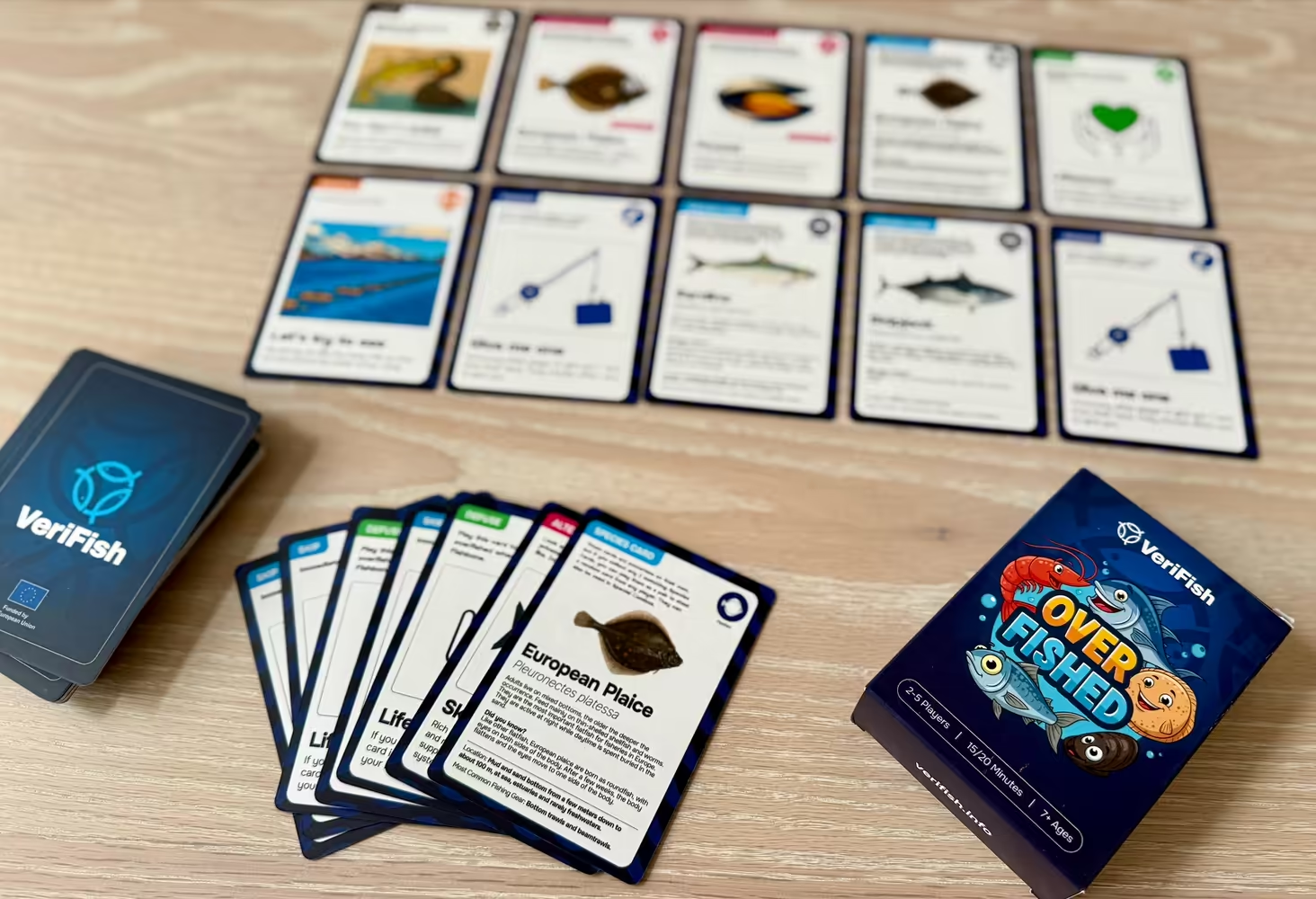
Enter: Overfished, the card game
Overfished is an educational card game designed to introduce players to real-world seafood challenges — from overfishing and ecosystem dynamics to consumer choice and sustainability trade-offs.
It engages people of all ages and all levels of seafood knowledge.
Through gameplay, players experience how decisions impact fisheries, markets, and ecosystems. They start to see how resource management works and how quickly things can spiral when pressure outweighs stewardship.
In other words, it simulates the complexity of seafood systems in a format that feels accessible and interactive rather than academic (read: boring).
We Desperately Need to Make Seafood Fun
I spent my graduate research studying the human dimensions of fisheries; how people think, behave, and make decisions within seafood systems.
My entire thesis could be summed up into one sentence: facts do not change behaviour.
But emotion does. Experience does. Fun does.
We talk a lot about “the next generation of seafood consumers.”
Gen Z and Millennials are highly skeptical of vague claims (especially environmental ones), craving more transparency, and ready to engage with companies who are willing to provide it.
Traditional seafood messaging often doesn’t resonate with them.
But interactive tools, collaborative learning, and game-based systems thinking, do.
If we want seafood to compete in a world where plant-based brands, tech startups, and climate platforms are innovating rapidly in how they communicate, seafood has to innovate too.
Overfished is one example of that innovation.
Seafood has historically underinvested in consumer education that feels engaging and modern.
(Hellllllo, that’s why I even have a job?!)
We often assume people either “get it” or they don’t.
But that’s not fair. Consumers are’t stupid, we’re just not talking to them in their language.
If we want stronger consumer trust and better, more informed seafood narratives, that ultimately lead to increases in seafood consumption, then we need tools that make seafood literacy approachable.
Creative approaches like Overfished are moving us in the right direction.
If you’re curious about how VeriFish is approaching seafood transparency and education, I encourage you to explore their work.
And if you want to check our Overfished the card game for yourself, you can get it here!