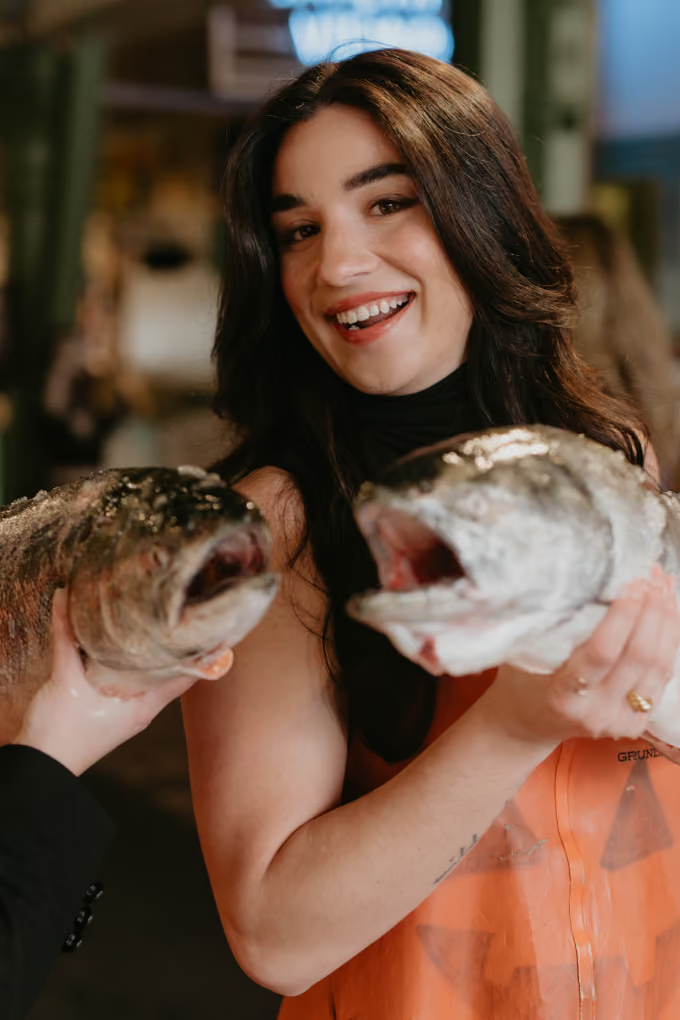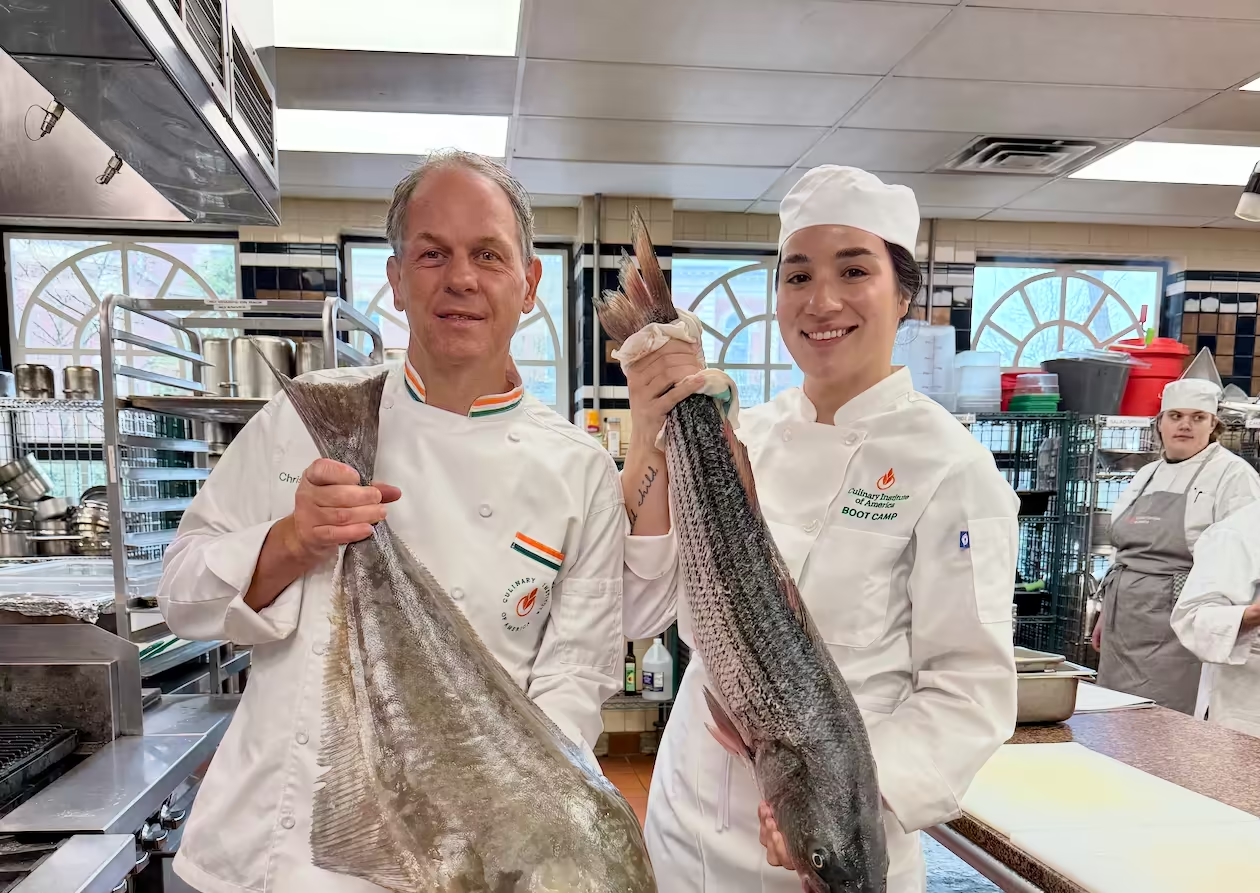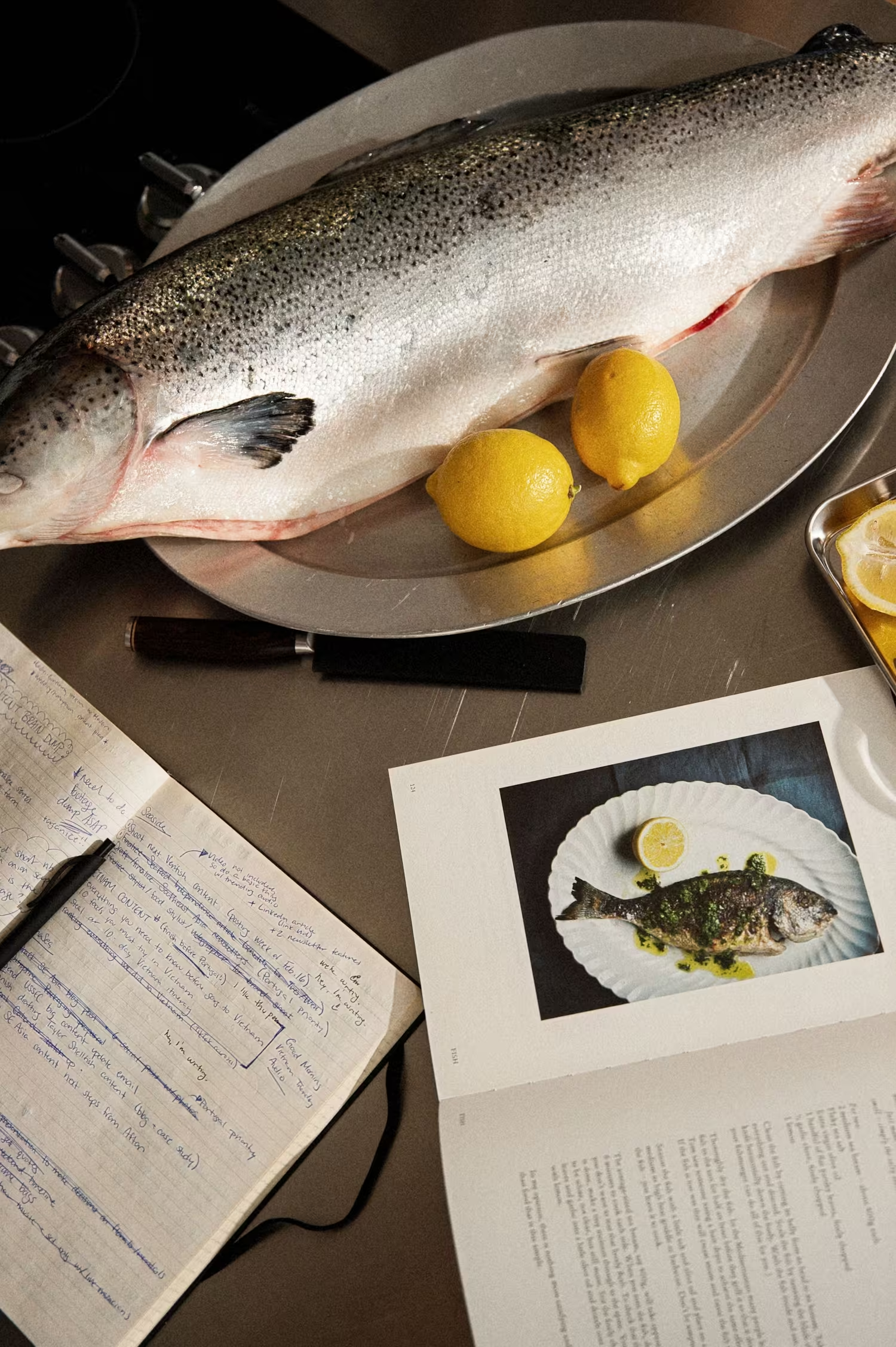
The seafood counter can be one of the most intimidating places in the grocery store, but it doesn’t need to be.
You do not need to be a chef, a fisheries scientist, or a “fish person” to buy great seafood. You just need to know what to look for and what questions to ask.
Start with the counter itself
Before you even look at the fish, look at the case.
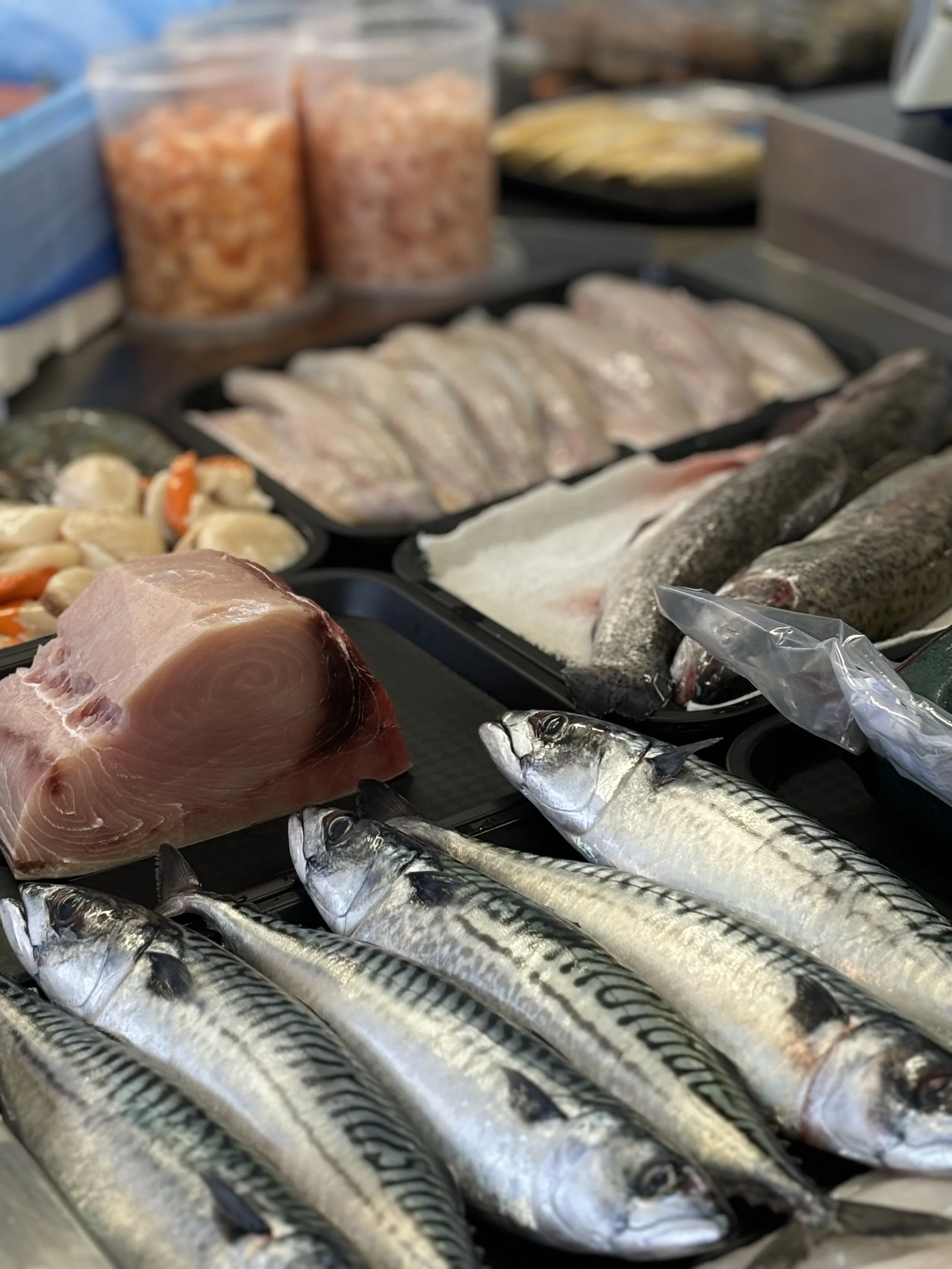
A great seafood counter is clean. The ice is fresh, clear, and packed snugly around the product — not melted or dirty. Fillets are arranged neatly, not stacked on top of each other. Whole fish are displayed belly-down or on their side, with the eye showing. The whole space smells like a clean ocean. Not “fishy.” Not chemical. Ocean.
If a counter is messy, fishy-smelling, or sparsely stocked at peak shopping hours, that tells you something. Move on, or be more selective.

For whole fish: the eyes, gills, and skin
A fresh whole fish should look almost alive.
- Eyes: clear, bright, slightly bulging. Sunken or cloudy eyes are a sign the fish had been out of the water too long.
- Gills: vivid red or rich pink. Brown, gray, or slimy gills are a hard pass.
- Scales and skin: shiny, intact, almost iridescent. The skin should look wet and tight — never dry or dull.
- Body: firm. Press the flesh gently — it should spring back. If your finger leaves a dent, the fish is past its prime.
Do not be afraid to ask your fishmonger or the person behind the fish counter to see, touch, and smell the fish before buying!
For fillets: color, surface, and structure
Fillets are trickier because the visual cues most people rely on are gone. But there are still tells.
- Color: vibrant and consistent for the species. Salmon should be coral or pink-orange depending on type, not gray or brown at the edges. White fish should be translucent and bright, not chalky or yellow.
- Surface: moist and glossy, not dry or sticky. There should be no liquid pooling on the bottom of the tray.
- Structure: the muscle should look tight and unbroken. Visible gaps, flaking, or stair-step separation between segments mean the fillet is not as fresh as you want.
- Edges: clean, not browned, yellowed, or oxidized — and not dry or soggy.
Fish shouldn’t smell like fish
Fresh seafood smells like the ocean. Briny, slightly sweet, mineral, clean.
It should not smell like:
- “Fishy” (that is the smell of seafood breaking down)
- Ammonia (a major red flag)
- Chemical or metallic
- Off in any way you cannot quite explain
When in doubt, trust your nose. It knows.
The questions to ask
A good seafood counter wants to be asked questions. A great one will know the answers.
A few worth using:
- “When did this come in?”
- “Where is this from?”
- “Is it wild or farmed?”
- “Was this previously frozen?”
- “What is freshest today?”
- “What would you cook tonight?”
That last one is my favorite. It tells you what is moving fastest, which is usually the same as what is freshest.
A note on seasonality
Not all seafood is available all the time. That is part of what makes it exciting.
Most farmed seafood — Atlantic salmon, mussels, oysters, shrimp — is available year-round, because production schedules don’t depend on a wild season. Frozen seafood is also year-round by design. But a lot of the wild products people get the most excited about are seasonal, and they have short windows.
BC spot prawns are landed for roughly six weeks in the spring. Wild Alaska salmon runs from late spring through early fall, depending on the species. East Coast soft-shell crab is a few weeks in early summer. Bay scallops are an autumn-into-winter thing. If you see something like that at a counter outside of its window, it is either frozen or something to ask questions about.
If you want a quick reference, the Monterey Bay Fisheries Trust seasonality guide is a great public tracker, and the Chefs Resources fresh fish availability chart breaks down peak vs. limited availability month by month. Both are worth a bookmark.
How to buy frozen seafood
If you’ve been following me for a while, then you know I’m a big proponent of frozen seafood. And I'm really trying to change the negative narrative surrounding frozen fish, because oftentimes frozen seafood is fresher than fresh!
But the same rule applies: not all frozen is created equal. When you pick up a package, look for these:
- Vacuum-sealed and undamaged. The packaging should be tight to the product, with no torn corners, crushed edges, or air pockets.
- Uniform color, no white or gray patches. Dry-looking discoloration is freezer burn — not unsafe, but a sign of moisture loss and lower quality.
- No large ice crystals on the fish. A light frost is normal. But chunky ice crystals, or ice between the fish and the packaging, usually mean the product was thawed and refrozen at some point. That kills texture.
- No liquid in the package. Pooled liquid (frozen or thawed) is another sign of a temperature break in the supply chain.
- Look for FAS or “frozen at sea.” This is a quality marker — it means the product was flash-frozen on the boat, often within minutes of being landed.
A note on sustainability
Sustainability looks different depending on the species, the gear, the country of origin, and whether the product is wild or farmed — and it is not always obvious from a label. The good news is that the same questions you ask for freshness — where is this from, is it wild or farmed, when did it come in — are also the questions that help you buy responsibly.
If you want the full breakdown — what sustainable seafood actually means, what the labels do and don’t guarantee, and why eating seafood can be a powerful thing for the ocean — I wrote a full post on that here.
You can also join my FREE 5-day sustainable seafood email challenge to learn more about what to look for when trying to find sustainable seafood options at the grocery store or fish market.
Once you’ve bought it
Buying great seafood is half the work. Getting it home in good shape is the other half.
Seafood is more temperature-sensitive than most proteins. Once you’ve picked your fish, get it cold and get it home. If you’re running other errands, ask for it on ice or in an extra bag, and put it in the fridge or freezer the second you walk in the door. Cook fresh fillets within a day or two — or, if plans change, freeze them properly. Treat it like the perishable product it is, and it will repay you on the plate.